In short: Martial arts after 40 has no upper age limit. What changes is not whether you can start, but how you start and which class you choose for it.
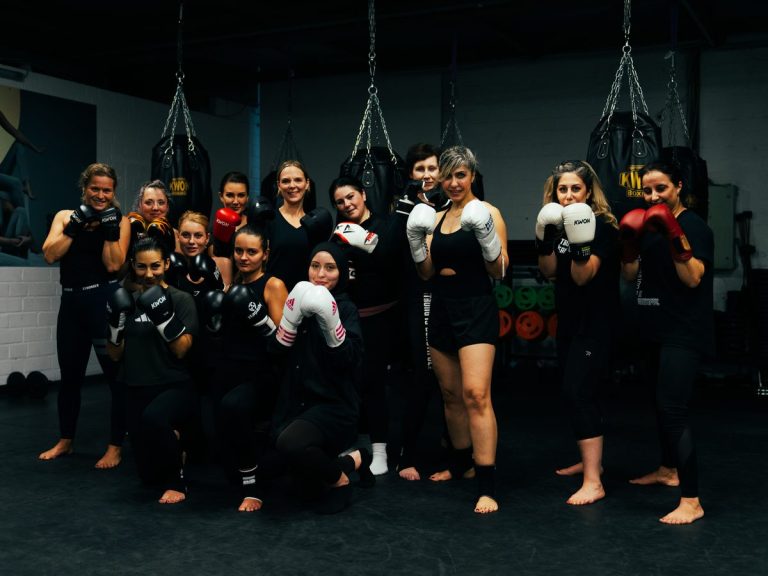
One thing up front so that you do not go looking for it: we have no over-40 class of its own in Aachen. In our adult classes everyone from age 16 trains together, and that is no concession but the normal case in any martial arts school. Groups are divided by ability, not by year of birth.
What is really different about martial arts after 40?
Three things shift, and none of them argues against starting:
- Recovery takes longer. Two sessions a week with a day in between achieve more than three on consecutive days.
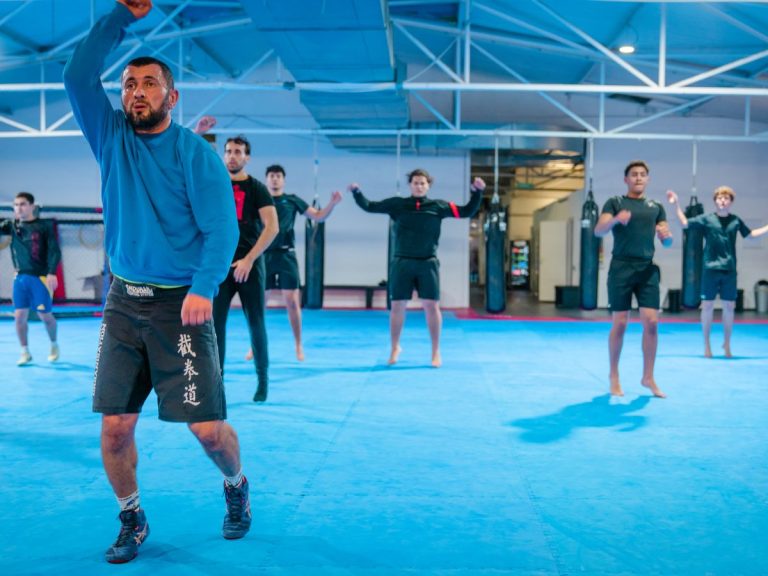
- Flexibility is the bottleneck, not strength. If you have sat at a desk for ten years, you notice it first in your hips and shoulders. That is exactly why every class with us begins with at least 15 to 20 minutes of warm-up and ends with careful stretching.
- The head learns faster than the body. Older beginners often grasp technique more quickly and want to put it into practice straight away. The patience to get the movement clean first and only then add pace is the most important training partner in the first months.
Which classes suit a later start?
If technique should come before athleticism
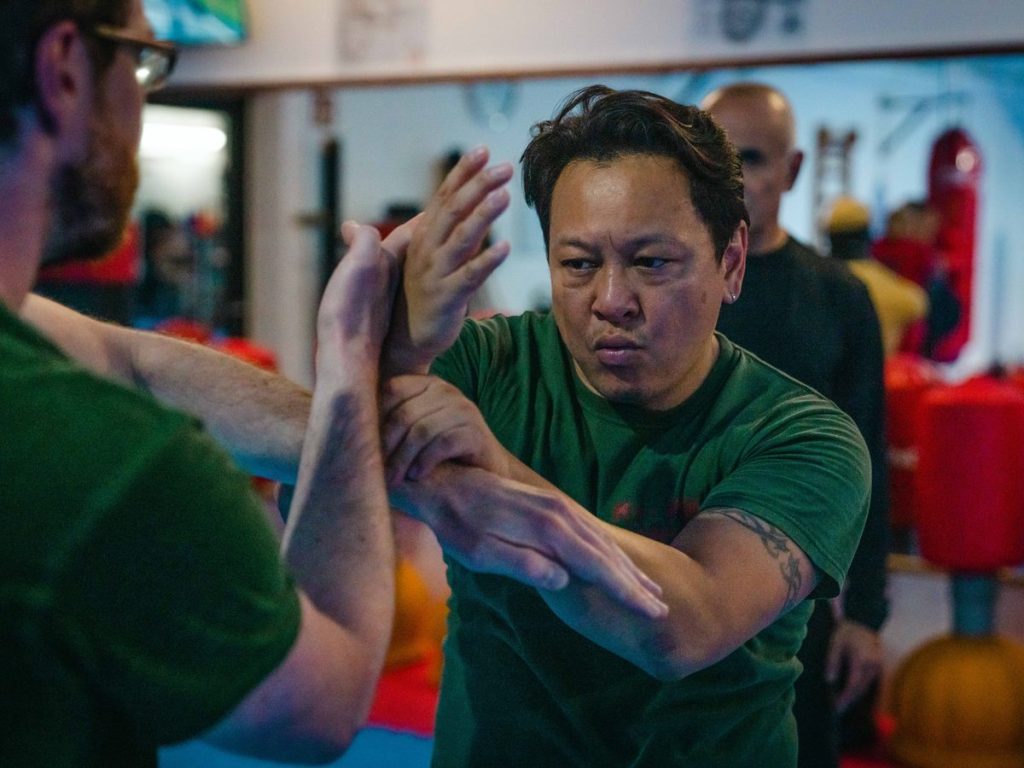
Wing Chun works at short range and through structure rather than strength. There are no high kicks, no jumps, and the training effort lies in the detail. Training is on Mondays and Wednesdays from 19:00 to 20:30.
Also Kali and Escrima suit well because coordination and timing are in the foreground. Stick fighting runs on Thursdays from 18:00 to 19:00 and Saturdays from 14:00 to 15:00, open from age 16. Knife training on Mondays from 18:00 to 19:00 is open from age 18.
If you want to learn to punch cleanly
Boxing has the smallest toolbox: four basic punches, plus footwork and head movement. Little choice means little overload. Training is on Tuesdays, Thursdays and Fridays from 19:00 to 20:30. The differences to kickboxing are covered in the comparison Boxing or kickboxing.
If position matters more to you than pace
In Ground fighting position decides more often than speed. That suits later starters, and nobody gets hit. Sessions are on Thursdays from 19:00 to 20:30 and Saturdays from 12:00 to 13:30. The Saturday slot fits well when your week is full.
If the foundation is missing first
Sometimes the most honest start is not a martial arts class. Our Gym offers machines for all muscle groups, a free weights area, circuit training and calisthenics, plus support from five trainers. To get to know it there is a free trial session with a free induction (20 minutes). If you would like more guidance, book Personal training. If you build a foundation for three months and then move into a martial arts class, you usually get further than someone who lands in sparring straight away.
As class formats with a clear structure, LES MILLS BODYPUMP for muscular endurance and LES MILLS GRIT for short, intense sessions of 30 minutes are also suitable. In both you set the pace and the weight yourself.
Do you have to spar?
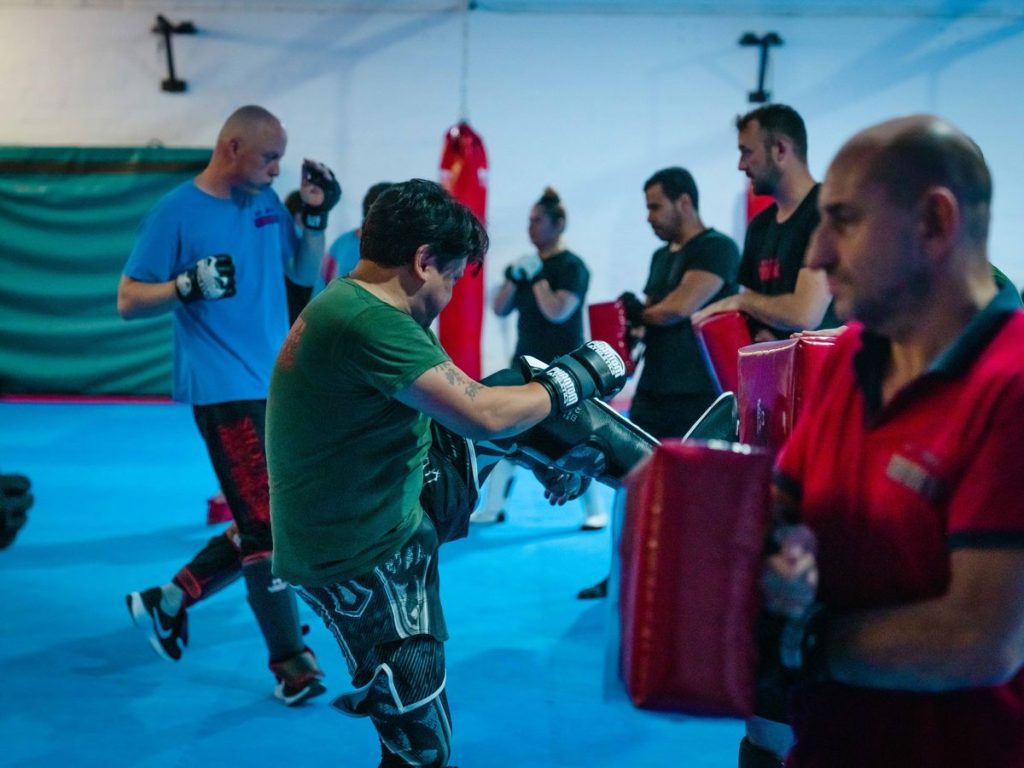
Many late starters worry less about fitness than about the moment when someone stands opposite them. Two things on this: sparring does not come in the first hour, only once you are technically ready. And in the sparring part of a session there is an alternative of endurance training on the punch bag or in the group. So you do not have to sit out if you do not want to spar on a particular evening. You will find more in the guide sparring in martial arts.
What does a realistic plan for three months look like?
- Weeks 1 to 4: one fixed session a week, always the same class. Not more. The aim is for your body to take on the rhythm.
- Weeks 5 to 8: add flexibility, ten minutes a day for hips and shoulders. That achieves more than a third session.
- Weeks 9 to 12: only now think about whether a third session or a second class is added.
Before the first session, talk briefly with the trainer if you have pre-existing conditions, a knee or back problem or a long break behind you. That is no special treatment but the reason why we work in changing partner teams and check execution. If you have health restrictions, please also clear the start with your doctor.
How much exercise adults need is summarised by the Federal Ministry of Health in its recommendations for promoting physical activity in adults , as a PDF to read.
Come by and have a look
Two trial classes are free and non-binding. For a later start this is the most honest test: you see who else is in the class, how the pace is and whether the tone suits you. We train at Jülicher Straße 216 in Aachen.
Secure your slot
Book a free trial
Try two sessions for free, with no obligation and no contract. Pick your class and preferred date right here, without leaving the page.
Class schedule
Your week at the dojo
Pick a day or switch the calendar view.
The dates are filtered immediately.
Available classes
Classes on the selected day
No class, no timetable
Try the gym
Just pick a day and drop by during our opening hours. How long you train is up to you.
- Free training on the machines
- No fixed time
- Free and non-binding
Open: Monday - Friday 09:00-12:00, Monday - Friday 16:00-21:00, Saturday 12:00-17:00
What to bring and when to be there is on the page about the Free trial class. You will find more texts for individual target groups in the section Martial arts for whom.
Frequently asked questions about starting after 40
Is there a class of its own for over-40s or over-50s?
No. All adult classes are open from age 16 and are divided by ability, not by age. In kickboxing there are separate groups for beginners and intermediate and for advanced and fighters.
Will I be the oldest in the class?
Probably not. In the adult classes the range is wide. How it looks on a particular evening is best seen at the trial class.
I have not done sport for ten years. Is that enough for a martial arts class?
Yes. Fitness builds in training, and in the first weeks you decide yourself when to take a break. If you would rather build a foundation first, start in the gym and switch later.
Which class is gentlest on the joints?
That cannot be answered across the board because it depends on your history. Wing Chun manages without high kicks and jumps, and in ground fighting the impact load from strikes does not apply. Talk it through with the trainer before the first class.
How often should I train?
One fixed session a week, always in the same class, is the best choice for the start. Regularity over months achieves more than one intense week.