In short: Your first martial arts class consists of a warm-up, technique with a partner, a conditioning part and stretching. Nobody sends you into a fight in the first minutes, and you do not need to be able to do anything beforehand.
Most people who walk into a training hall for the first time have the same two worries: not keeping up and standing out. Both disappear within the first half hour. So that you know in advance what to expect, below is the flow of a session at our martial arts school in Aachen, step by step.
First martial arts class: what do you need to sort out beforehand?
You register beforehand for a specific class. Be there at least 15 minutes before the start. You need that time to change, for a short chat with the trainer and to arrive calmly instead of bursting into the warm-up already under way.
In that chat you tell him two things: that it is your first time and whether there is anything the trainer should know, such as a knee that no longer does everything. After that he knows what to watch for with you.
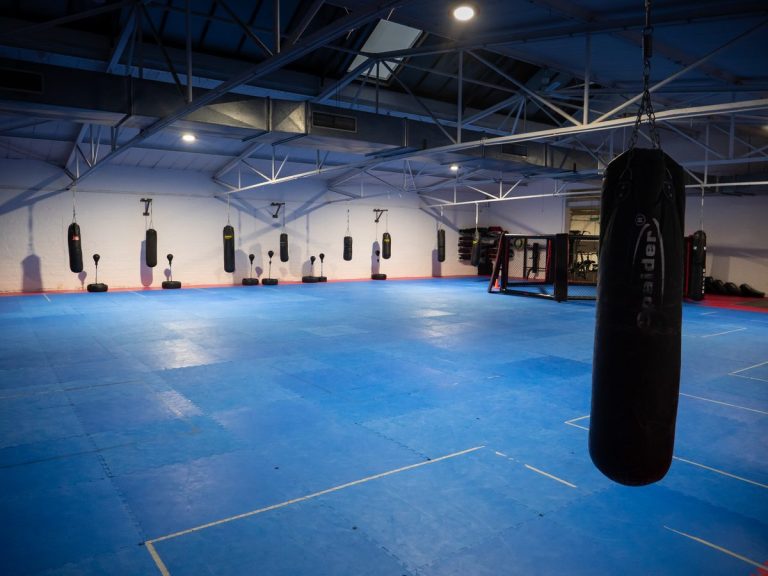
Changing rooms, showers and lockers for valuables are on site, and the car park in front is free. Parents who bring their child have their own waiting area.
Part 1: how does the warm-up work?
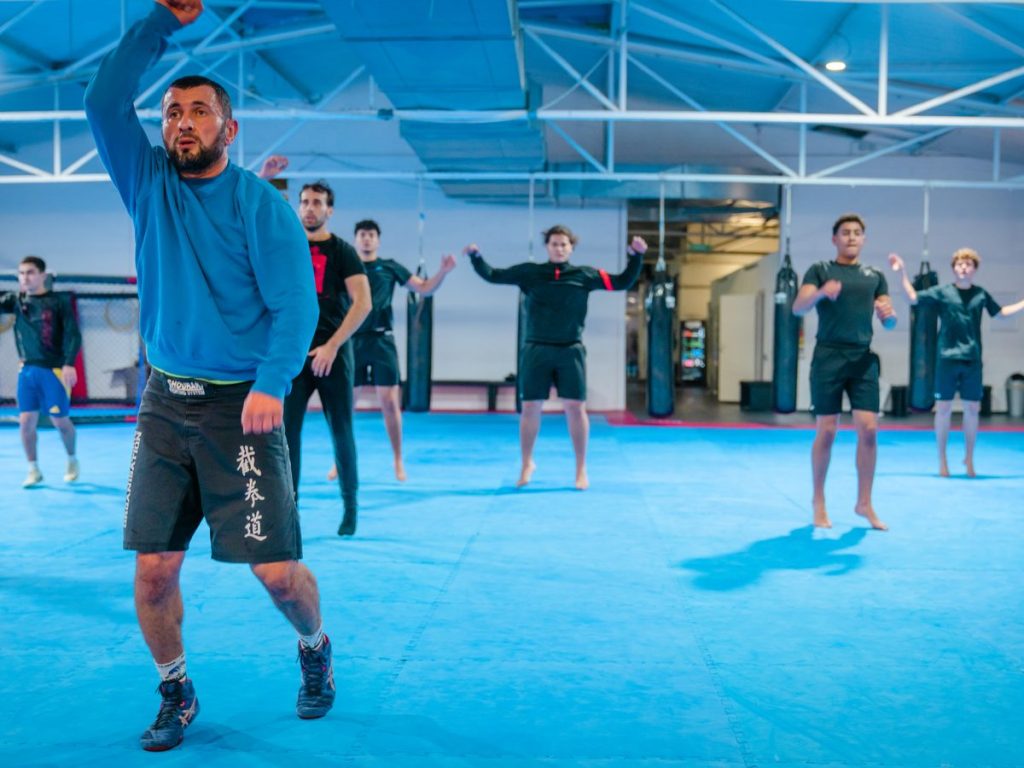
The warm-up lasts 15 to 20 minutes and brings circulation, joints and muscles up to working temperature. It is not a test. If you step out briefly to catch your breath, nobody thinks the worse of you. In the first weeks you decide yourself when to take a break.
Most people underestimate how much this part is already training. In martial arts, fitness is not a by-product but the precondition for technique still looking clean in the second half of a session.
Part 2: what happens in the technique part?
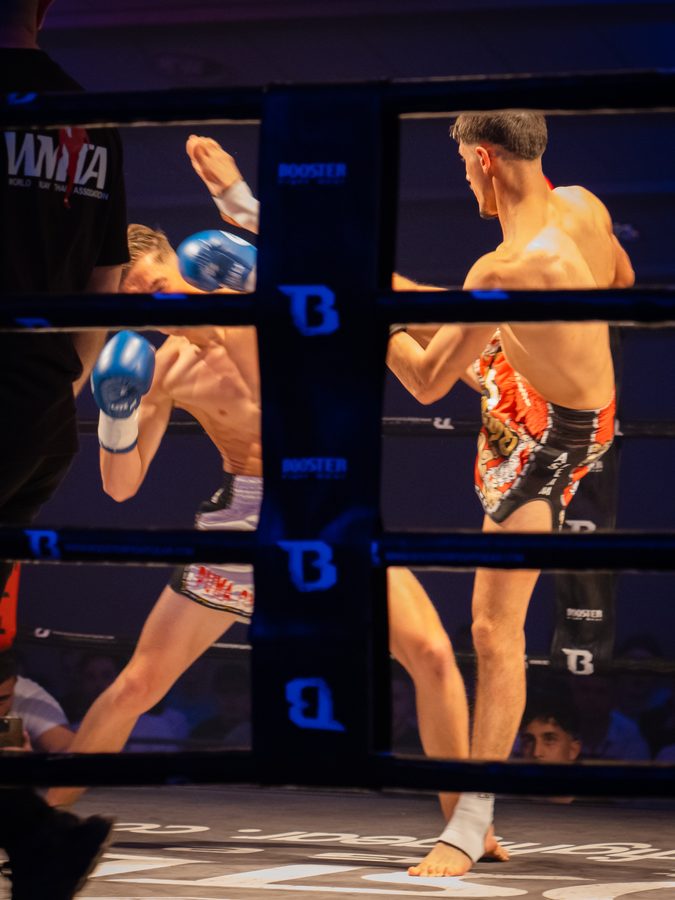
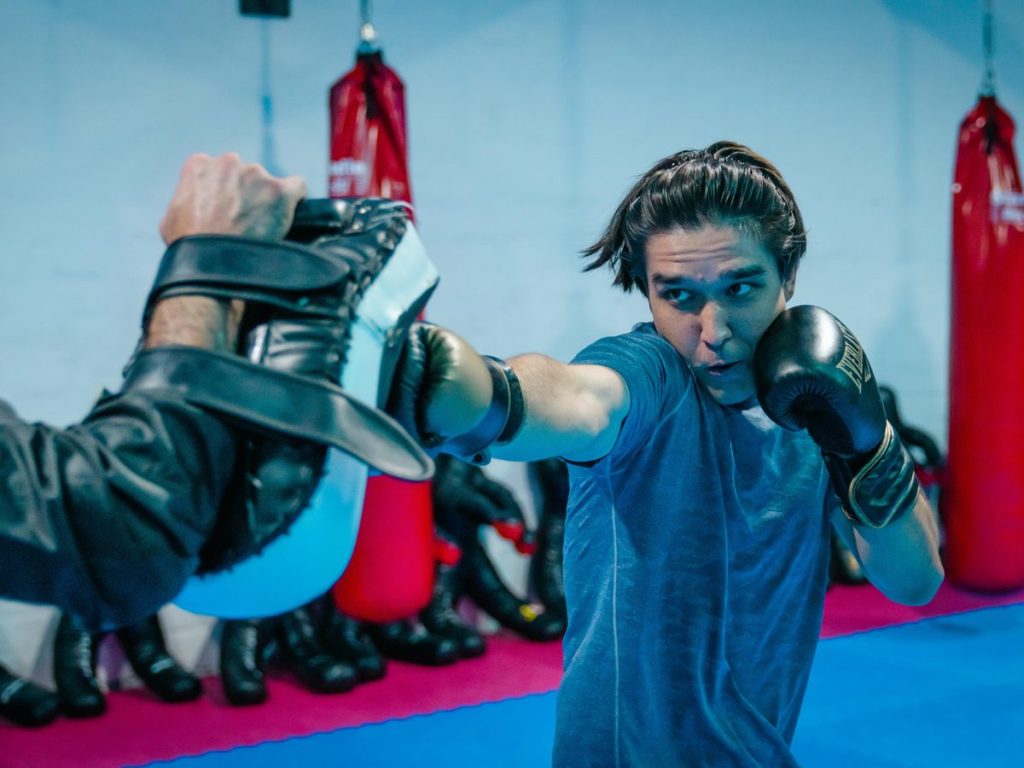
Now comes the part you are here for. The trainer shows a technique, you practise it in pairs or on pads and heavy bags, and he walks along the rows and corrects. What exactly comes up depends on the class: in Boxing jab, cross, hook and uppercut, in Ground fighting locks and control on the ground, in Kickboxing low kicks, guard and combinations.
You will not do anything perfectly in this first hour, and that is planned for. A technique sits after weeks, not after twenty repetitions. How you can tell it is going well: at the end of the hour you know what you are practising and can show it slowly.
Partner drills are not fighting. You work in turns, one does, one holds. Newcomers are usually paired with someone who has been there longer and therefore knows exactly how much pace is appropriate.
Part 3: when does sparring come in?
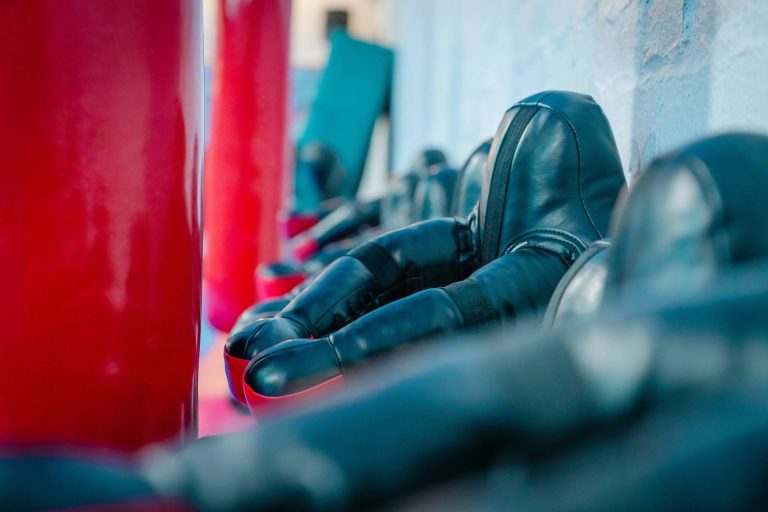
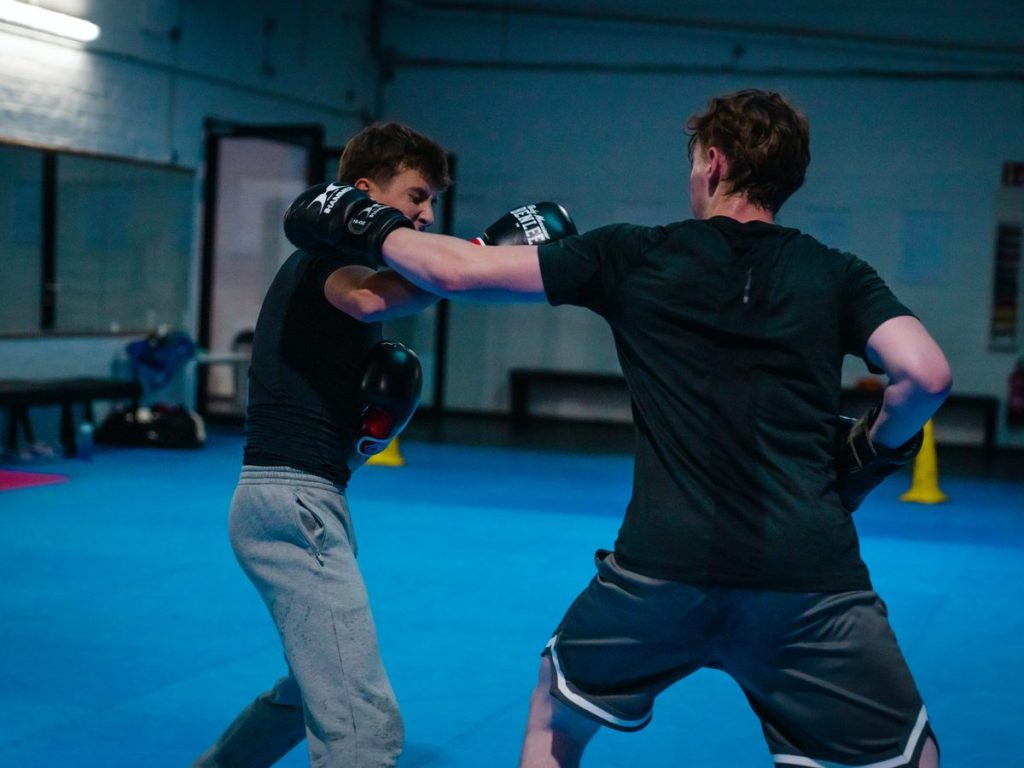
The third part gets more intense. Depending on the class and group, there are conditioning rounds on the heavy bag or sparring rounds with changing partners. In sparring, protective gear and mutual respect are a must.
Important for your first hour: sparring is controlled and only comes once you are technically ready. In the beginner groups you start with technique and partner drills. If you would rather work on the punch bag in this phase, that is a normal alternative and not backing out. You will find more in the guide on sparring in martial arts.
Part 4: how does the session end?
The session ends with stretching and a cool-down. That part seems unspectacular and still decides how you feel the next day. Sore muscles after the first session are normal and gone after two or three classes.
That this sequence of warm-up, technique part and finish is not a house recipe is shown by a look at other associations: the German Judo Federation describes the structure of a training session in the same pattern.
What do you wear and what do you bring?
- Sportswear, ideally black.
- Well-fitting socks or flat trainers. Shoes with thick soles stay at home so that you do not twist an ankle.
- Enough water.
- Boxing gloves and protective gear, if you already have some. You can train without them anyway.
- No jewellery. Tie long hair back, and do not forget a hair tie.
This is covered in more detail in the guide to martial arts equipment for beginners. In short: for the first weeks you hardly need to buy anything.
Which class suits the first session?
If you have not decided yet: kickboxing is the usual way in standing, ground fighting the usual way in on the ground. Both work without previous experience, and in ground fighting you train No-Gi, that is, without the classic uniform. The guide Which martial art is right for mehelps with the choice, and in the section Comparing martial arts the differences between the individual arts are set side by side.
The adult classes are open from age 16. Younger people train in their own groups: ages 3 to 8 in Kids’ classes, ages 9 to 15 in youth classes.
Pick your date
You can try it twice for free, with no obligation and no contract. Choose class and date below, then you know in advance which group you will be in. We train at Jülicher Straße 216 in Aachen.
Secure your slot
Book a free trial
Try two sessions for free, with no obligation and no contract. Pick your class and preferred date right here, without leaving the page.
Class schedule
Your week at the dojo
Pick a day or switch the calendar view.
The dates are filtered immediately.
Available classes
Classes on the selected day
No class, no timetable
Try the gym
Just pick a day and drop by during our opening hours. How long you train is up to you.
- Free training on the machines
- No fixed time
- Free and non-binding
Open: Monday - Friday 09:00-12:00, Monday - Friday 16:00-21:00, Saturday 12:00-17:00
All details on the process and registration are on the page about the Free trial class. You will find more texts for getting started in the section Getting started with martial arts.
Frequently asked questions about the first class
How long does a training session last?
The martial arts classes for adults usually last 90 minutes with us, the kids’ and youth groups 45 to 60 minutes. The exact time is in the timetable for each class, for example kickboxing on Tuesdays and Fridays from 19:00 to 20:30.
What happens if I cannot do an exercise?
Then the trainer shows it to you again slowly or gives you an easier variation. That is the normal case in every beginner group, not the exception.
Do I have to fight in the first class?
No. Sparring is controlled and is only introduced once you are technically ready. Your first class is about technique and partner drills.
Do I need my own equipment for the first class?
No. Sportswear, flat shoes or socks and water are enough. Boxing gloves and protective gear are welcome but not required.
How often should I come after the first time?
Once a week works, and the technique sticks better with every week. If you come twice, you progress faster.