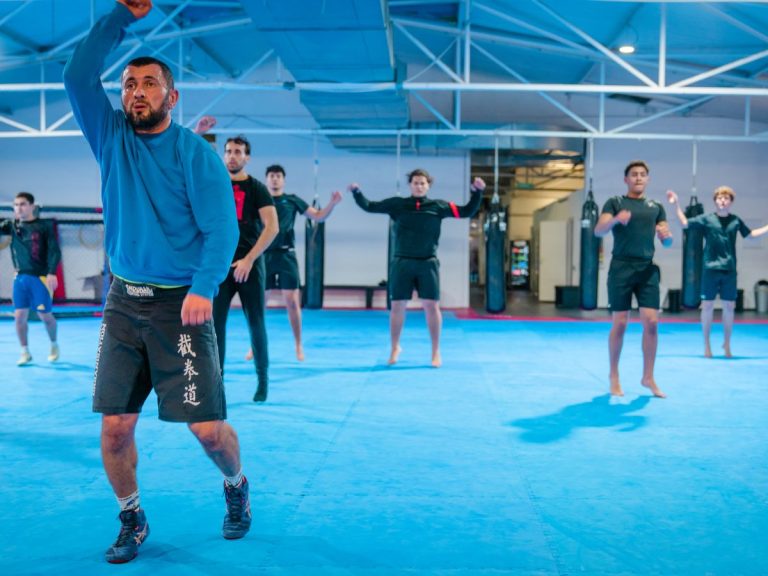
Start with your goal and the choice quickly gets small. If you want to be able to defend yourself, you need partner drills standing, in the clinch and on the ground. If you want to get fit, a technique and stamina class gets you there faster, and you never have to take a hit.
Below you will first find the five questions that decide the choice, then every martial art on offer at our martial arts school in Aachen. For each one we also say when it is probably not for you. That saves you the detour of three trial classes in the wrong group.
You can also start right away: the quiz asks you a few questions and suggests a class in a minute.
The 5 questions that decide the choice
Take two minutes and answer these five questions for yourself. After that, usually two classes are left out of all of them.
- Your goal. Self-defence, competition, fitness, clearing your head or learning clean technique. These goals lead to different classes, and it is the most important of the five questions. Be honest with yourself here.
- Your level of contact. Do you want to give and take hits, do you want controlled sparring with protective equipment, or do you want no body contact at all? Without contact, you are left with martial-arts-inspired fitness training such as LES MILLS BODYCOMBAT. With contact, everything else is open to you.
- Standing or ground. Punching and kicking happen standing up, locks and control on the ground. If you want both, you end up with MMA. If you cannot imagine working close to a partner, stay standing.
- Alone on technique or in a team. Some people come for the movement and like to work on their own, others need a group and a partner. Wing Chun and Kali are strongly partner-based, while kickboxing and boxing also work on pads and the heavy bag.
- Age and fitness. All adult classes with us start from age 16, and there are separate groups for younger people. Your starting fitness does not decide whether you can begin, only how the first weeks feel.
Jeet Kune Do is the umbrella over all our classes
Jeet Kune Do does not appear as a class of its own on our timetable. It is the way of thinking behind it: take what works, leave out what does not, and do not tie yourself to one style. That is why elements of Wing Chun show up in kickboxing and techniques from Brazilian Jiu-Jitsu and freestyle wrestling in ground fighting. Spread across the week, adult training brings together 27 different martial sports and martial arts, including boxing, kickboxing, grappling and Kali with stick fighting from 16 and knife fighting from 18.
So when you start, you do not commit to one style. If you begin in kickboxing and find after six months that you miss the ground game, you can move over to ground fighting.
Kickboxing
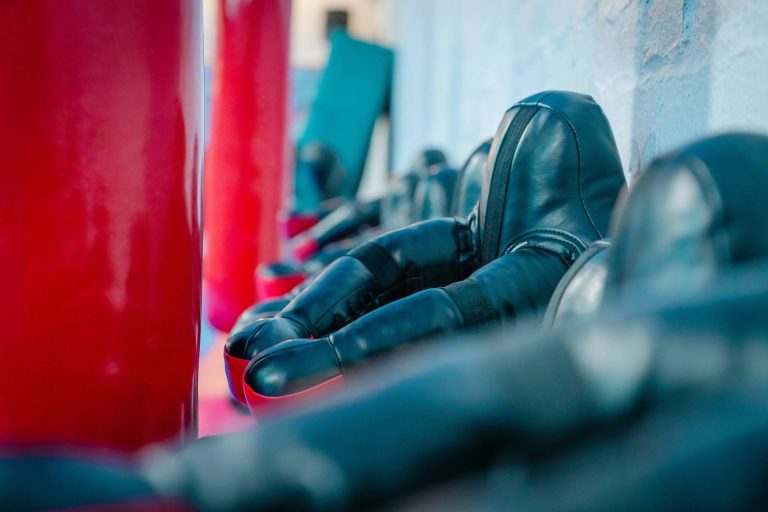
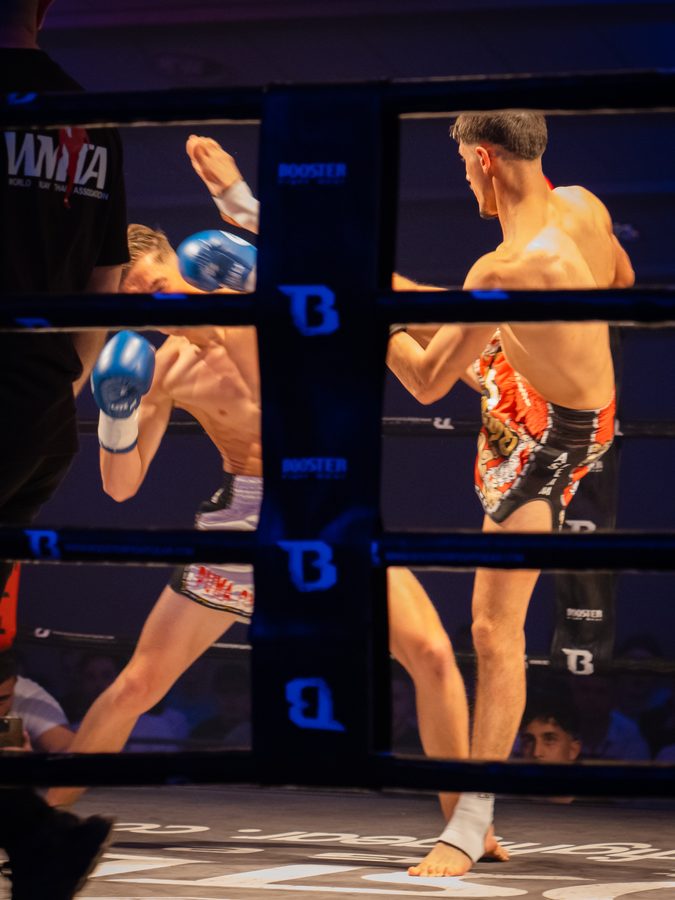
Kickboxing is the usual way in if you want to stay standing. You learn punching and kicking techniques, guard, footwork and combinations, train on pads and heavy bags and often change partners. Beginners and advanced students have their own groups, so in your first week you will not be standing among competitors.
It suits you if you want to build stamina and punching power and are looking for a start that works straight away without previous experience. If you want to learn ground fighting or avoid body contact altogether, this is the wrong place. Details are on the page about Kickboxing in Aachen.
Boxing
In boxing you work only with your hands. In return it is very much about body mechanics, sense of distance, footwork and timing. If you can box, you bring that into every other discipline.
Good for you if you like polishing details, want faster reflexes and are looking for a clean technical foundation. You will not find kicks, throws or ground work here. There is a separate page on boxing training .
MMA
MMA combines punching, kicking, clinch and ground techniques. No distance is left out, and accordingly it takes a long time until everything sits. You work on four areas at once instead of one.
Choose MMA if you want the whole picture, are willing to get into ground work and have patience for a longer road. If you want to see visible progress in a single discipline within a few weeks, or find close body contact unpleasant, another class will serve you better. More under MMA training.
Ground fighting and grappling
Ground fighting is about positions, control and submissions. The techniques come from Brazilian Jiu-Jitsu, freestyle wrestling and kickboxing, and training is No-Gi, that is, without the classic uniform. Much of the practice is free rolling with a partner. Nobody gets hit. Many people therefore find it easier to start than expected.
A good fit if you want to play technique against strength, like to puzzle things out and do not mind close body contact. If you need distance from your partner or mainly want to learn striking, you are better off looking elsewhere. The rest is on the page about ground fighting and grappling with BJJ in Aachen .
Wing Chun
Wing Chun works at short range. Instead of pitting force against force, you redirect pressure and work along the centreline. In the partner drill Chi Sao you learn to react through arm contact before you see anything.
It suits you if principles interest you more than strength, you want to be able to act in tight spaces and you like working with a partner. If you are after a sweaty stamina workout or are working towards competition, you are better off elsewhere. It is covered in detail on the page about Wing Chun.
Kali and Escrima
Kali, also called Escrima or Arnis, comes from the Philippines. You train handling the stick and knife, plus unarmed techniques, with us in the two focus areas of stick fighting and knife training. You train stick fighting from age 16 and handling the knife from 18. The stick mainly trains your coordination and your eye for distance.
Interesting if you want to learn something that is hardly available elsewhere and timing appeals to you. If you expect a classic fitness class or have no use for training weapons, better skip it. It continues on the page about Kali and Escrima.
The martial arts compared directly
The martial arts comparison in one table: the discipline on the left, next to it the goal it serves best, the usual body contact and whether you can start without previous experience.
| Martial art | Strongest goal | Body contact | Start without previous experience |
|---|---|---|---|
| Kickboxing | Fitness and self-defence standing | medium to high, sparring with protective equipment | yes, with their own beginner groups |
| Boxing | Technique, reflexes, fitness | medium, lots of partner work on the pads | yes |
| MMA | Self-defence at all distances | high, standing and ground | yes, with patience |
| Ground fighting (grappling) | Control, muscular endurance, self-defence on the ground | high, but without strikes | yes |
| Wing Chun | Reaction and self-defence at short range | medium, partner drills throughout | yes |
| Kali / Escrima | Coordination, timing, handling training weapons | low to medium | yes, stick from 16, knife from 18 |
| LES MILLS BODYCOMBAT | Stamina and coordination without an opponent | none | yes |
The table is enough for a first sort. Usually two rows are left, and you try those out. If you want to train entirely without an opponent, take a look at LES MILLS BODYCOMBAT .
For kids, teenagers, women and beginners over 40
Children train with us separated by age. The Panda group for 3 to 5-year-olds works on coordination, confidence and rules through play. In the Ninja group for 6 to 8-year-olds, elements of boxing, kickboxing, freestyle wrestling and Brazilian Jiu-Jitsu are added. From age 9 it is on to the Samurai group, the youth training up to age 15, with the same elements in an age-appropriate form, No-Gi on the ground. Everything about the kids’ groups is on the page about Kids’ classes.
All adult classes are open from age 16. In addition there is the women’s class Fitness Kickboxing and Thai Boxing from age 18: kickboxing technique on pads and bags, stamina and strength in a women-only group.
Starting at 40 or 50 is the same as any other start, just with more time to warm up. We have no separate age class; in every session you choose your own pace. If you are coming back from a longer break, you are usually better off with kickboxing or ground fighting than with MMA, because there one thing is added after another.
You find out in the trial class
The trial class is free. You register beforehand and pick the class that was left after this text. What to bring and when to be there is on the page about the Free trial class.
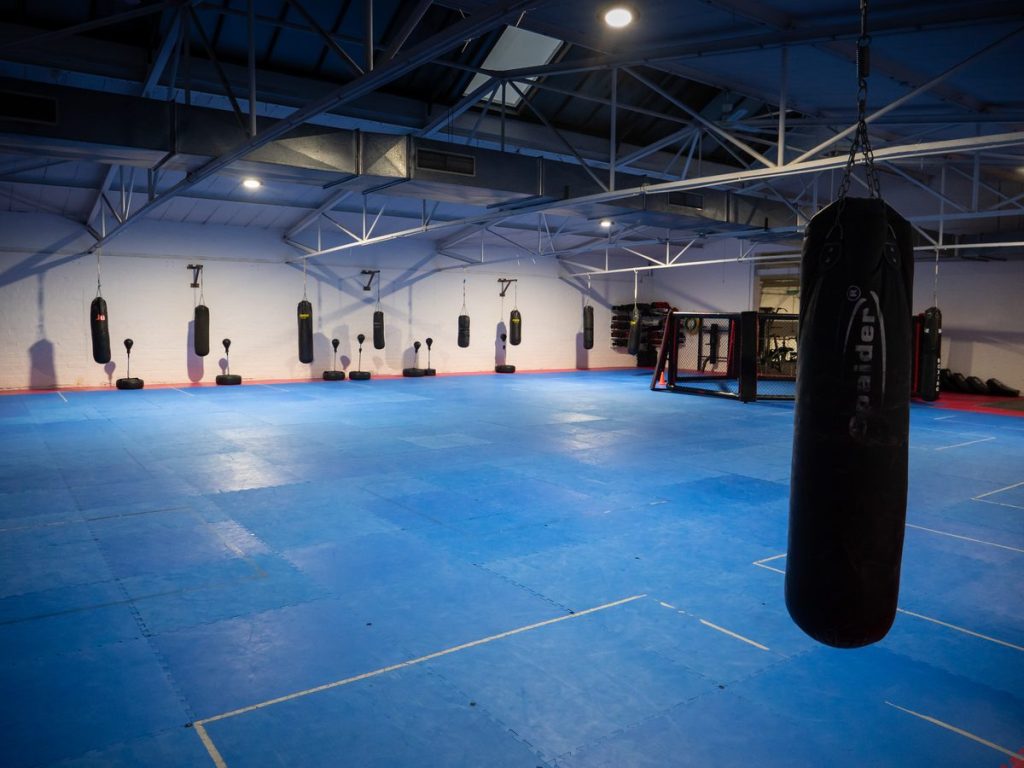
If you cannot decide between two classes, try both. Trying out twice for free is expressly intended with us. We train at Jülicher Straße 216 in Aachen. If you want to get to know the school beforehand, the page about our martial arts schoolshows how we work and who teaches.
The details for every class: Martial arts in Aachen. For kids: Kids’ martial arts in Aachen. For fitness: Fitness in Aachen.
Secure your slot
Book a free trial
Try two sessions for free, with no obligation and no contract. Pick your class and preferred date right here, without leaving the page.
Class schedule
Your week at the dojo
Pick a day or switch the calendar view.
The dates are filtered immediately.
Available classes
Classes on the selected day
No class, no timetable
Try the gym
Just pick a day and drop by during our opening hours. How long you train is up to you.
- Free training on the machines
- No fixed time
- Free and non-binding
Open: Monday - Friday 09:00-12:00, Monday - Friday 16:00-21:00, Saturday 12:00-17:00
Frequently asked questions about getting started
How often a week should I train as a beginner?
Once a week is a good start. What matters is that you come regularly; then the technique sticks and your body adapts. If you would like to train more often, ask at the gym.
Can I start with no martial arts experience at all?
Yes. Every class starts with the basics, and in the beginner groups everyone is in the same situation. Everything you need in your first session is shown to you in that same session.
What if I am unfit and quickly out of breath?
That is the normal case when starting and no obstacle. Fitness comes through training. In the first weeks you decide yourself when to take a break.
Do I have to spar if I do not want to?
Sparring is part of the martial arts classes but does not come at you in the first session. You start with technique and partner drills, and you discuss with your trainer when you first spar. Martial-arts-inspired fitness training stays entirely without contact.
From what age can I start, and is there an upper limit?
The adult classes are open from age 16, the women’s class from age 18. Children train from age 3 in their own groups, teenagers from 9 to 15. There is no upper limit. You choose your own pace.