In short: Learning self-defence with us does not mean signing up for a class of its own. Self-defence is a goal, and almost every martial art contributes to it, just to different parts of it. This text sorts out which class in Aachen covers which part.
If you are looking for a weekend course that makes you able to defend yourself in two days, you will not find it with us. What works is less spectacular: regular training in which you learn to react under pressure. The rest is technique, and that comes with time.
Which four distances are involved?
A confrontation does not take place at one distance but moves. That is exactly why no single technique is enough.
- Distance. The zone where nothing has happened yet. Here attention decides, not technique.
- Punching and kicking distance. This is where boxing and kickboxing work.
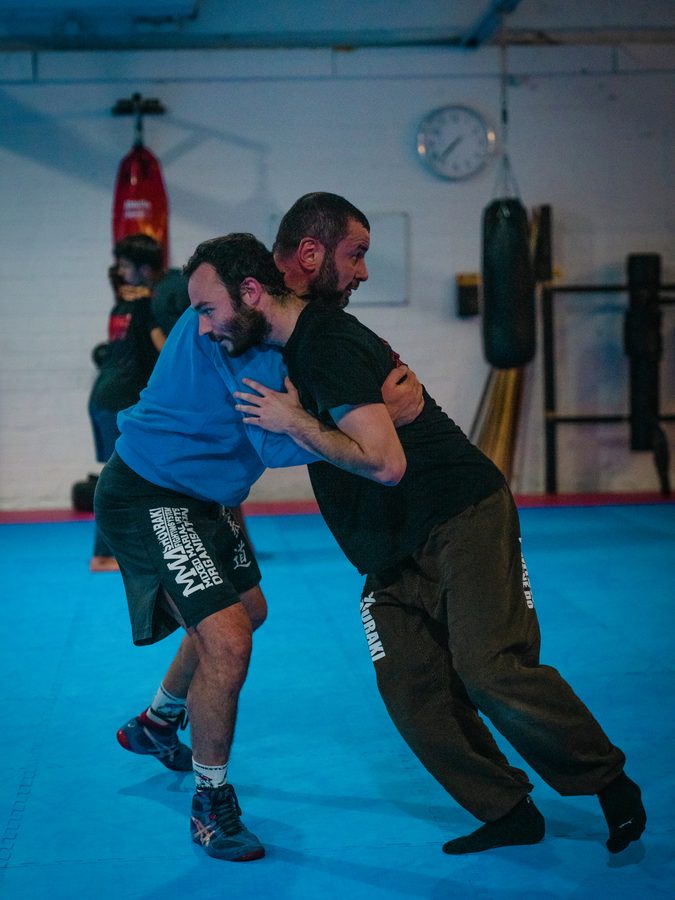
- Clinch and short range. The most uncomfortable zone, because you can no longer wind up. Wing Chun and MMA work there.
- Ground. Many confrontations end there. If you do not know the ground, that is exactly where your blind spot is.
The four distances of a confrontation and the classes that cover them
| Distance | What counts there | Which class covers it |
|---|---|---|
| Distance | attention, not technique | no class, it is a matter of mindset |
| punching and kicking distance | sense of distance, guard, reaction | boxing and kickboxing |
| Clinch and short range | body mechanics in tight spaces | Wing Chun and MMA |
| Ground | position instead of pace | ground fighting and grappling, MMA |
Which class covers which part?
MMA: all distances in one class
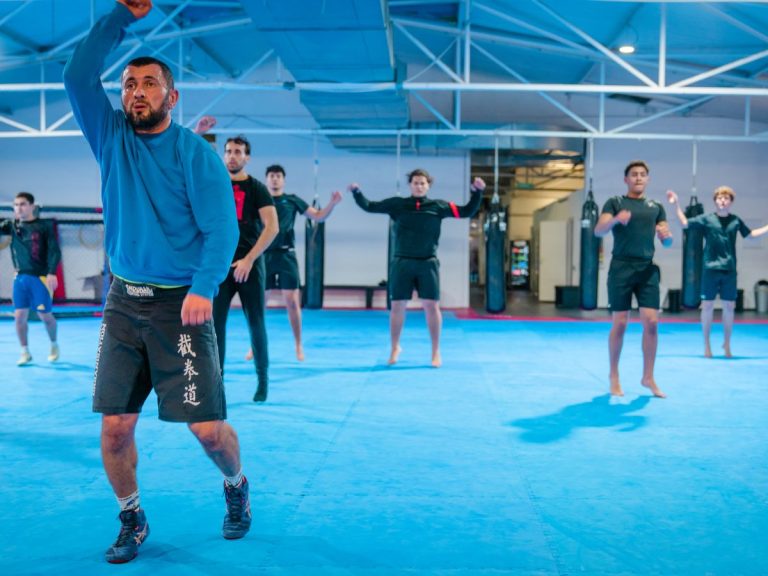
MMA in Aachen combines stand-up fighting, clinch and ground. Through this interplay you learn realistic techniques for different distances and situations. If you want as few blind spots as possible, this is right for you. Training is on Mondays and Wednesdays from 19:00 to 20:30, from age 16.
Wing Chun: short range and reflexes
Wing Chun is designed for exactly the distance that occurs most often in a real emergency: very close. The focus is on body mechanics and fast reflexes rather than strength. Sessions are on Mondays and Wednesdays from 19:00 to 20:30.
Ground fighting: the zone most people leave out
In Ground fighting you learn to hold your own in real dangerous situations when it gets tight. Training is No-Gi, that is, without the classic uniform, which transfers the techniques more directly to everyday clothing. Thursdays from 19:00 to 20:30 and Saturdays from 12:00 to 13:30, from age 16.
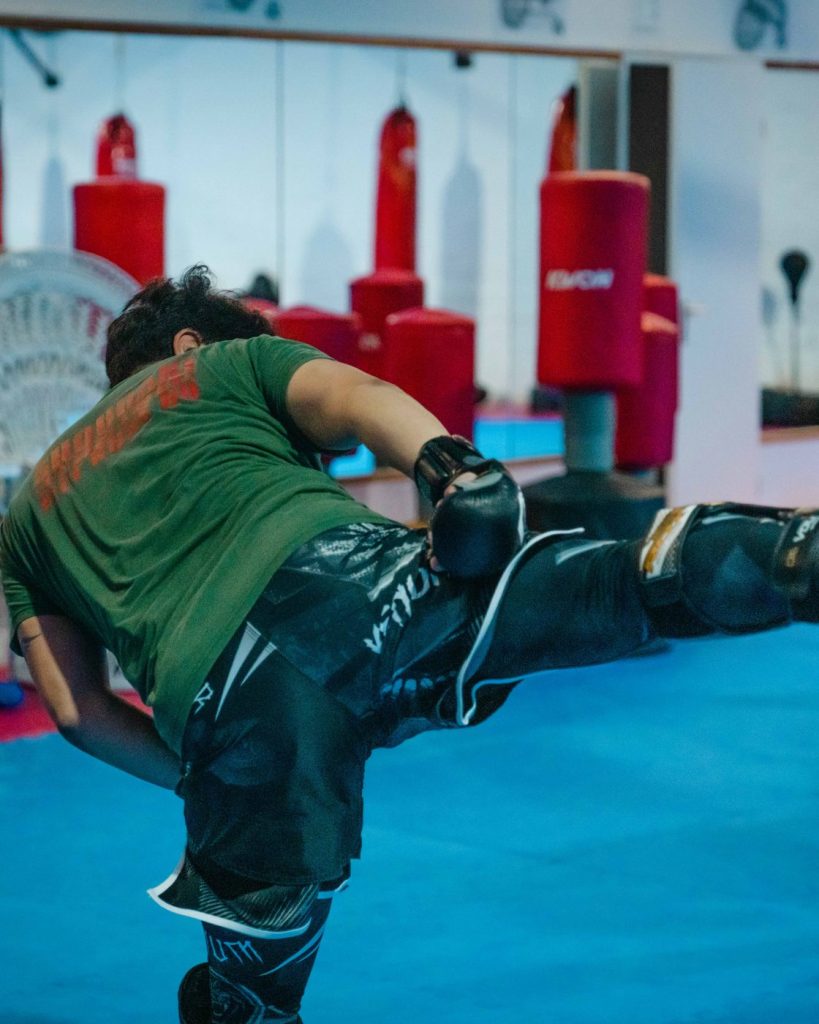
Boxing and kickboxing: reaction under pressure
Boxing and Kickboxing deliver the part that transfers most directly: sense of distance, guard and the ability not to freeze when something comes at you. In kickboxing you additionally train under pressure in sparring, and that is exactly the difference to pure technique training.
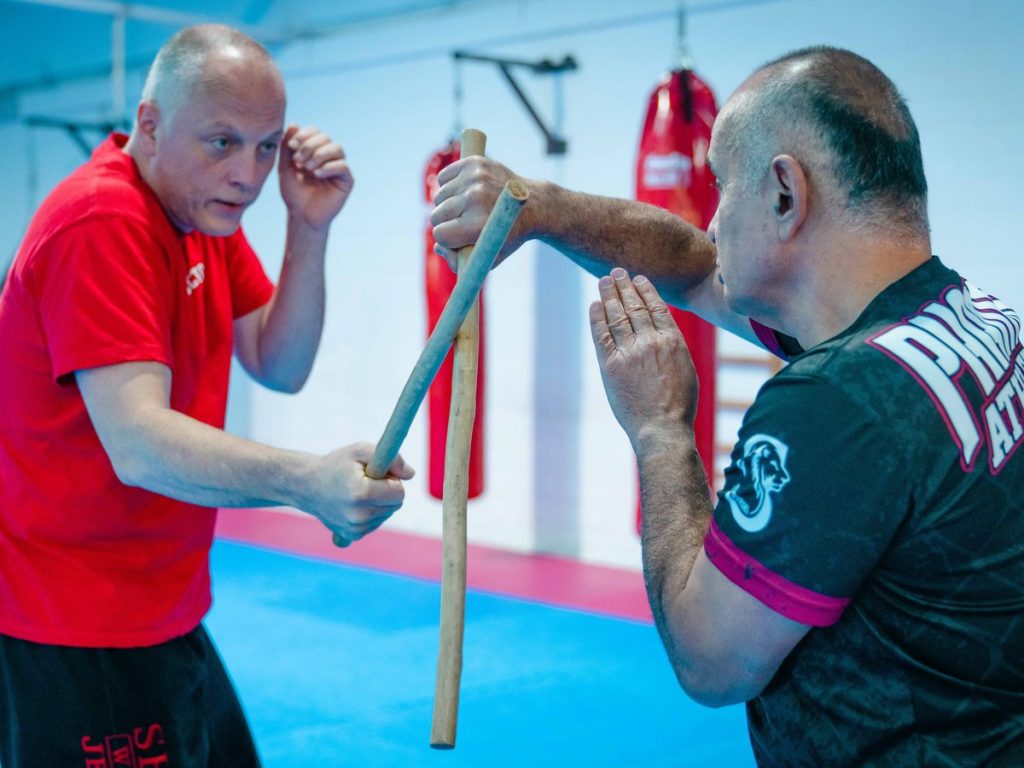
Kali and Escrima: weapons and everyday objects
Kali from the Philippines relies on realistic attack and defence patterns, with stick, knife and unarmed. Stick fighting runs on Thursdays from 18:00 to 19:00 and Saturdays from 14:00 to 15:00 and is open from age 16, knife training on Mondays from 18:00 to 19:00 from age 18.
What can no class replace?
The most important part of self-defence happens before it gets physical: recognising situations early, keeping your distance, getting loud, walking away. No technique in the world is as reliable as a situation you never get into in the first place.
Then there is the legal side. Self-defence is clearly regulated in Germany and has limits. What works in training is not automatically what stands up in court afterwards. If this interests you, you should inform yourself independently of training.
And the part that actually develops in training: if you work with changing partners every week, you get used to physical closeness and to pressure. This getting used to it is the reason martial arts helps in a real emergency, and it cannot be shortcut.
How long does it take?
Honest answer in stages: after four to six weeks you react differently because you see movements coming at you. After half a year you have the basics of one distance. After one to two years it becomes something you can call up under stress. One to two sessions a week are a sensible frame for that.
Learning self-defence: which way in suits whom?
- Womenwho want to approach the topic without sparring will find both routes side by side in the article Martial arts for women in Aachen .
- Children and teenagers train from age 3 in their own groups in the Kids’ classes (Panda 3 to 5, Ninja 6 to 8 years), from age 9 in the Samurai group in the youth classes with elements of boxing, kickboxing, freestyle wrestling and Brazilian Jiu-Jitsu No-Gi.
- Late starters will find in the article Martial arts after 40 the classes that go through technique rather than athleticism.
- Undecided people start with Which martial art is right for me.
What police and crime prevention advise on self-assertion is set out by the Police Crime Prevention of the Federal States and the Federal Government.
Two evenings to try it out
Two trial classes are free and non-binding. For this goal it makes sense to take one session standing and one on the ground. After that you know which zone suits you and where your blind spot is. We train at Jülicher Straße 216 in Aachen.
Secure your slot
Book a free trial
Try two sessions for free, with no obligation and no contract. Pick your class and preferred date right here, without leaving the page.
Class schedule
Your week at the dojo
Pick a day or switch the calendar view.
The dates are filtered immediately.
Available classes
Classes on the selected day
No class, no timetable
Try the gym
Just pick a day and drop by during our opening hours. How long you train is up to you.
- Free training on the machines
- No fixed time
- Free and non-binding
Open: Monday - Friday 09:00-12:00, Monday - Friday 16:00-21:00, Saturday 12:00-17:00
What to bring and how the evening goes is on the page about the Free trial class. You will find more articles on training goals in the guide section Goals.
Frequently asked questions about self-defence
Which martial art is best for self-defence?
The one you go to regularly. Technically, MMA covers most distances, Wing Chun the short range, ground fighting the ground and Kali handling weapons. A class you attend every week beats any theoretically superior class you drop after four weeks.
Is there a pure self-defence class?
No. Self-defence with us is part of the regular classes, not a class format of its own. The advantage: you keep training continuously instead of being back at zero after a weekend.
Do I have to spar for that?
For the transfer to a real emergency, training under pressure helps considerably. But it does not come straight away: sparring is controlled and only introduced once you are technically ready. In the sparring part there is also endurance training on the punch bag as an alternative.
From what age does that work?
The adult classes start from age 16, stick fighting also from 16, knife training from 18. Younger people train in the kids’ and youth groups from age 3.
How quickly can I defend myself?
A reliable foundation develops over months, not weeks. The first noticeable change, namely reacting differently instead of freezing, often comes after just four to six weeks.