In short: For your first class you need only sportswear, flat shoes or well-fitting socks and water as martial arts equipment. Everything else you buy later, once you know which class you are staying in.
Equipment is the most common unnecessary hurdle before getting started. Many people order gloves, shin guards and hand wraps beforehand and find after three weeks that the size does not fit or that the class they chose needs none of it. This text sorts out what you need when, and what is actually required in training with us in Aachen.
Stage 1: what do you need for the first class?
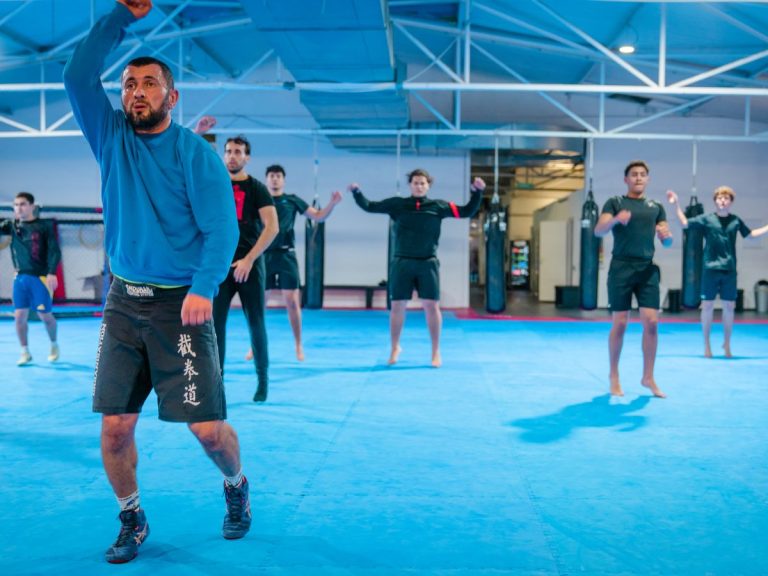
- Sportswear, ideally black. T-shirt and shorts or long sports trousers. Nothing with zips or buttons that can scrape a partner.
- Well-fitting socks or flat trainers. Shoes with thick soles stay at home. On a mat, a thick sole is the quickest way to a twisted ankle.
- Enough water. A session lasts up to 90 minutes.
- No jewellery. Rings, necklaces, earrings and watches come off. Tie long hair back and pack a hair tie.
- Boxing gloves and protective gear, if you have them. Optional. You can join the class without them just the same.
That is the complete list. There is more on the page about the Free trial class, and you will not need more than that in your first hour.
Stage 2: what comes after three to four weeks?
Once it is clear that you are staying, your first own pieces are worth it. Exactly which depends on the class.
Standing: kickboxing and boxing
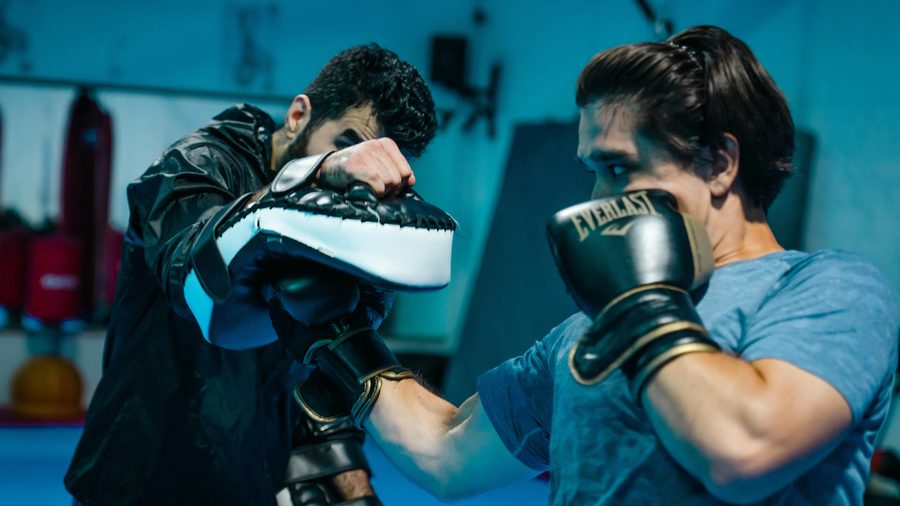
Your own boxing gloves are the first purchase. They are the piece of equipment that sits closest to the body and sweats the most. Add hand wraps or inner gloves, which stabilise the wrist and protect the gloves from the inside. In Kickboxing shin guards come later, in Boxing they do not.
On size: gloves are given in ounces. For training and partner work, heavier gloves are the safer ones because there is more padding between fist and partner. Which size is usual in your group is best asked of the trainer directly before you order.
On the ground: ground fighting and grappling
In Ground fighting we train No-Gi, that is, without the classic uniform. For you that means you do not need to buy a gi. Instead, close-fitting clothing makes sense because loose T-shirts get caught in grips. If you roll a lot, you add a mouthguard later.
MMA
MMA in Aachen combines standing and ground, so the equipment lies in between: gloves for the standing part, close-fitting clothing for the ground part. In sparring, protective gear and mutual respect are a must.
Kali and Escrima
In Kali and Escrima you work with the single stick, double sticks, tonfa and long stick. Whether and when you buy your own sticks is something you discuss in training. You train stick fighting from age 16 and knife training from age 18.
Fitness classes without contact
For LES MILLS BODYCOMBAT, BODYPUMP and GRIT you need no martial arts equipment at all. There is no body contact there; you work against an imaginary opponent or, in the case of the barbell classes, with the barbell and weights from the gym.
Stage 3: what do you almost never need?
A few things are often bought first and needed last. Headgear belongs in the advanced sparring phase and not on the beginner shelf. A punch bag of your own at home does not replace training with correction and, if in doubt, cements mistakes. And expensive brands make no difference as long as the fit is right.
The honest order is: train first, then buy. After four weeks you know which movements you make often, and you make every purchasing decision better than before.
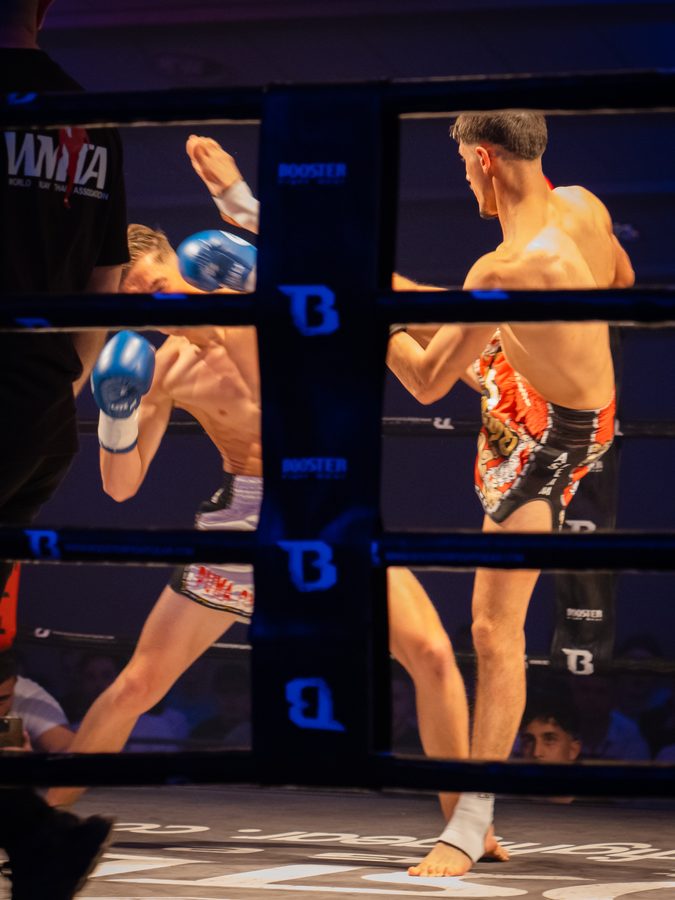
The protective equipment required in competition is listed by the German federation for kickboxing, WAKO Germany . For training with us you need significantly less of it.
What equipment do kids and teenagers need?
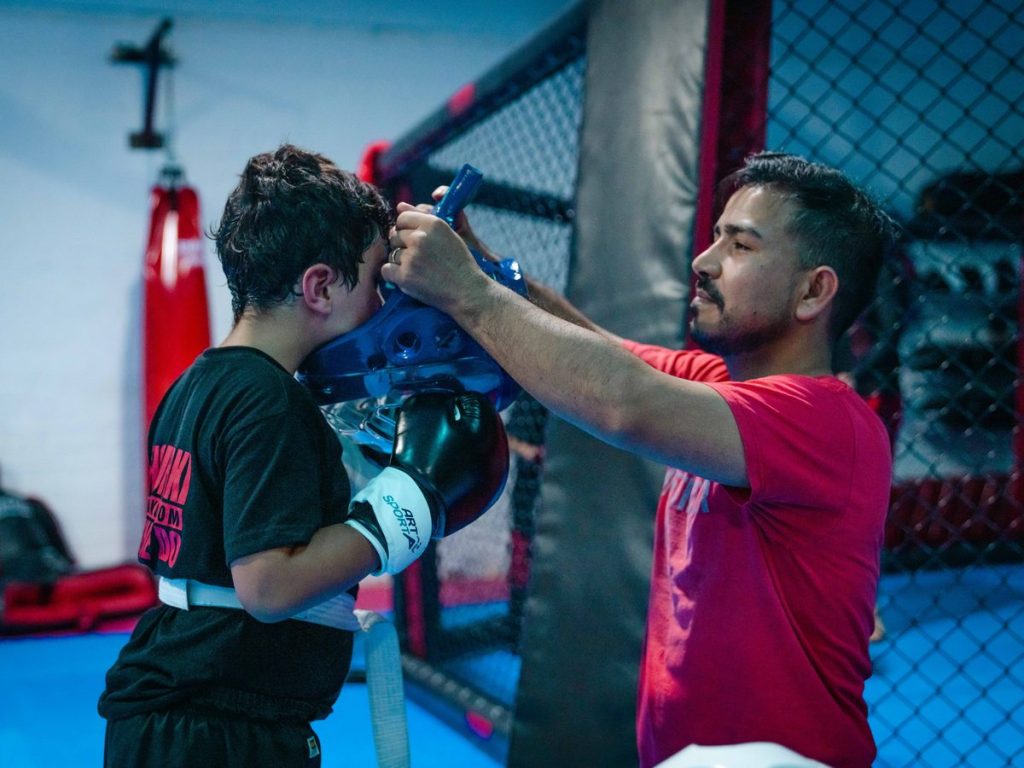
For getting started in Kids’ classes the same short list applies as for adults: comfortable sportswear, socks or flat shoes, a water bottle, no jewellery. In the Panda group for 3 to 5-year-olds and the Ninja group for 6 to 8-year-olds, movement comes first, not equipment.
In youth classes the Samurai group for ages 9 to 15, your own gloves are added over time, depending on the weekday you train: Mondays and Tuesdays grappling, Wednesdays and Fridays kickboxing, and youth boxing on Wednesdays and Thursdays, with Thursday as the beginners’ group. On the ground, No-Gi is trained here too.
How do you look after your equipment properly?
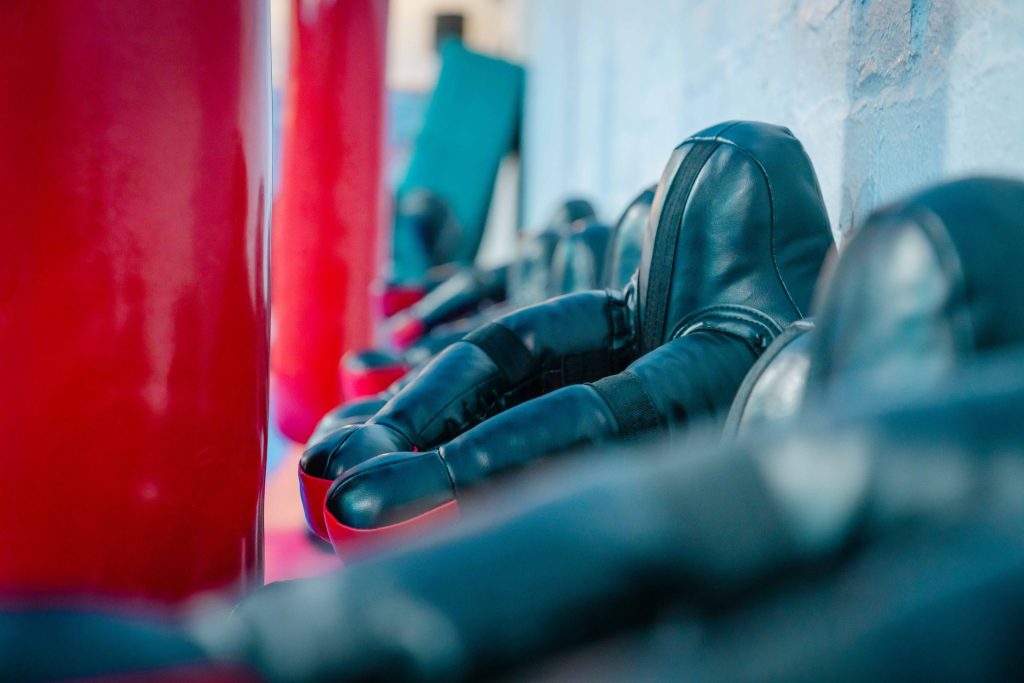
Open gloves after every session and let them air; do not stuff them into a closed sports bag. Wash hand wraps after every use. That sounds minor and is the difference between equipment that lasts two years and equipment that ends up in the bin after three months.
Leather takes longer to dry than synthetic leather but lasts considerably longer. Even so, nothing belongs on the radiator; it makes the material hard and cracked. A spot with some air is entirely enough, and a pair of gloves that dries through properly between two training days still smells bearable after a year.
First just come as you are
Trying out twice for free works without buying anything. Pick a class and a date below. How the first hour goes is explained in the guide to your first martial arts class.
Secure your slot
Book a free trial
Try two sessions for free, with no obligation and no contract. Pick your class and preferred date right here, without leaving the page.
Class schedule
Your week at the dojo
Pick a day or switch the calendar view.
The dates are filtered immediately.
Available classes
Classes on the selected day
No class, no timetable
Try the gym
Just pick a day and drop by during our opening hours. How long you train is up to you.
- Free training on the machines
- No fixed time
- Free and non-binding
Open: Monday - Friday 09:00-12:00, Monday - Friday 16:00-21:00, Saturday 12:00-17:00
If you do not yet know which class, the section Getting started with martial arts will help you further.
Frequently asked questions about martial arts equipment
Do I need a kimono or gi?
No. Our ground fighting is trained No-Gi, that is, without the classic uniform. In all other classes you do not need one either.
Which boxing gloves should I buy as a beginner?
Wait until after the first few sessions and then ask your trainer about the ounce weight that is usual in your group. Fit and weight matter more than the brand.
Can I train in normal running shoes?
Better not. Thick soles raise the risk of twisting an ankle. Flat trainers or well-fitting socks are the right choice.
What do I wear if I am torn between two classes?
Close-fitting sportswear fits everywhere, standing and on the ground. That way you can do both trial classes with the same kit.
Do kids need their own protective gear?
Not to start with. Sportswear, socks or flat shoes and a water bottle are enough. The trainer of the group will tell you what makes sense later.