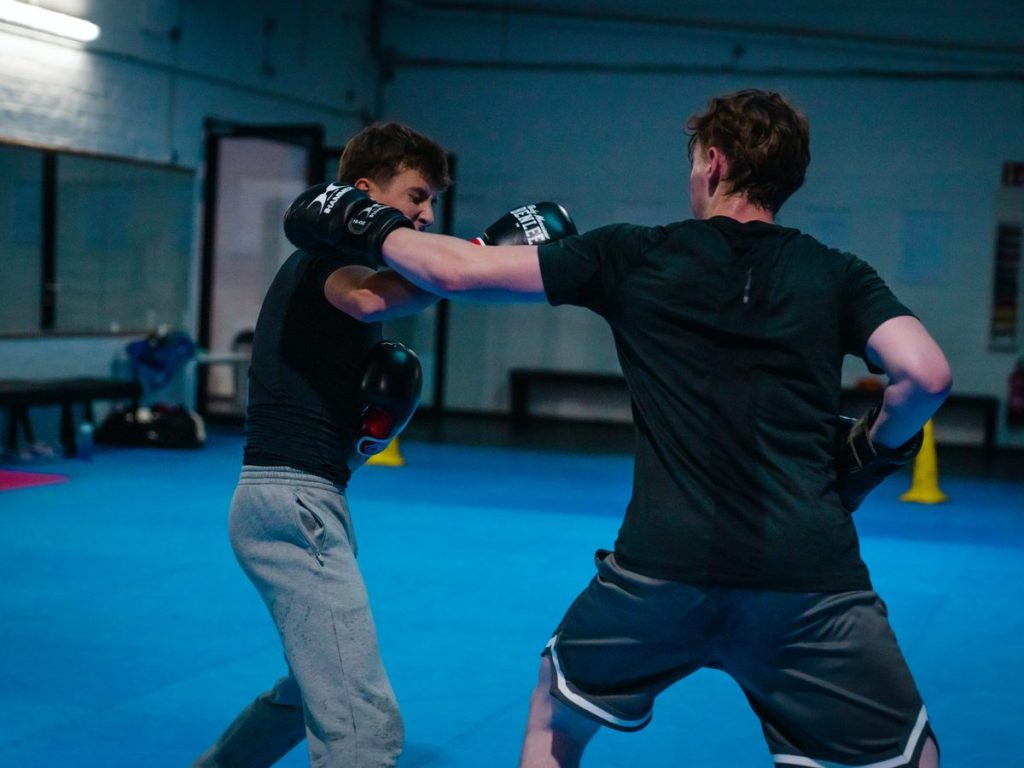
In short: Sparring in martial arts is not a fight. It is a form of practice with rules, protective gear and a partner who has the same goal as you: to get better, not to win.
Even so, it is the point where most beginners hesitate. So here, calmly: what sparring means, when it is added with us in Aachen, which levels there are and what happens if you do not want to spar on a particular evening.
What is sparring in martial arts?
In sparring you apply what you practised in isolation before, against someone who moves and reacts. On the heavy bag you alone decide when you strike. In sparring the other person has a say too. That very difference is the reason sparring exists at all: timing, distance and calm under pressure cannot be learned any other way.
What sparring is not: a competition, a pecking order or an exam. Someone who gives everything in sparring to win learns less than someone who deliberately tries out one thing.
When does sparring come in with us?
Not in the first hour. In training, safety comes first: sparring is carried out in a controlled way and only introduced once you are technically ready. Protective gear and mutual respect are a must. With careful training the risk of injury is low.
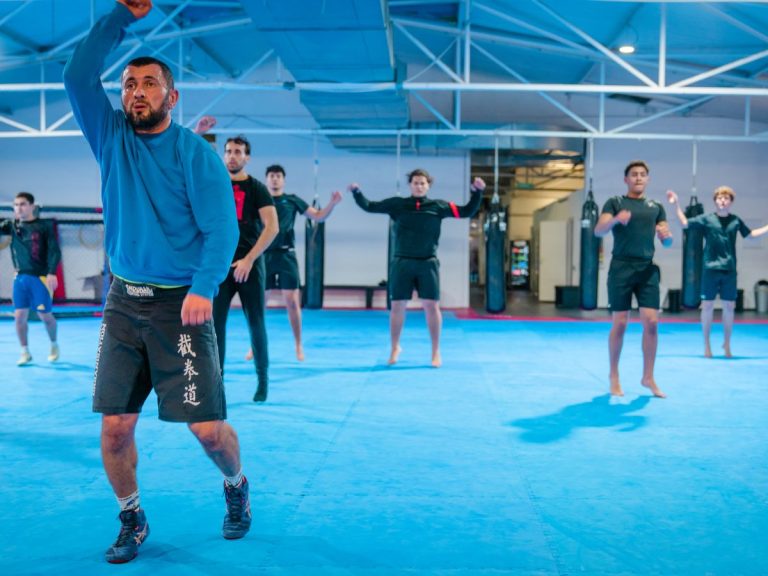
In the structure of a session, the sparring part comes at the back: first at least 15 to 20 minutes of warm-up, then technique and partner drills in changing teams, then conditioning and sparring, and stretching at the end. What this structure looks like in detail is in the article Your first martial arts class.
Which intensity levels are there?
Sparring is not one thing but a scale. That beginners shy away from it is mostly because they only have the top level in mind.
- Technique sparring. Very light contact, slow pace, often with a given task. For example: one attacks only with the lead hand, the other defends. Everyone starts here.
- Situational sparring. A particular situation is repeated, such as the way out of the corner or setting up a takedown. Freer than technique sparring, but with a clear brief.
- Free sparring. All permitted techniques, controlled hardness, changing partners. This is the form most people mean.
- Competition preparation. Only for those who actually compete. In kickboxing there is a group of its own for this, for advanced and fighters, on Tuesdays, Thursdays and Fridays from 17:30 to 19:00.
What does sparring look like in the individual classes?
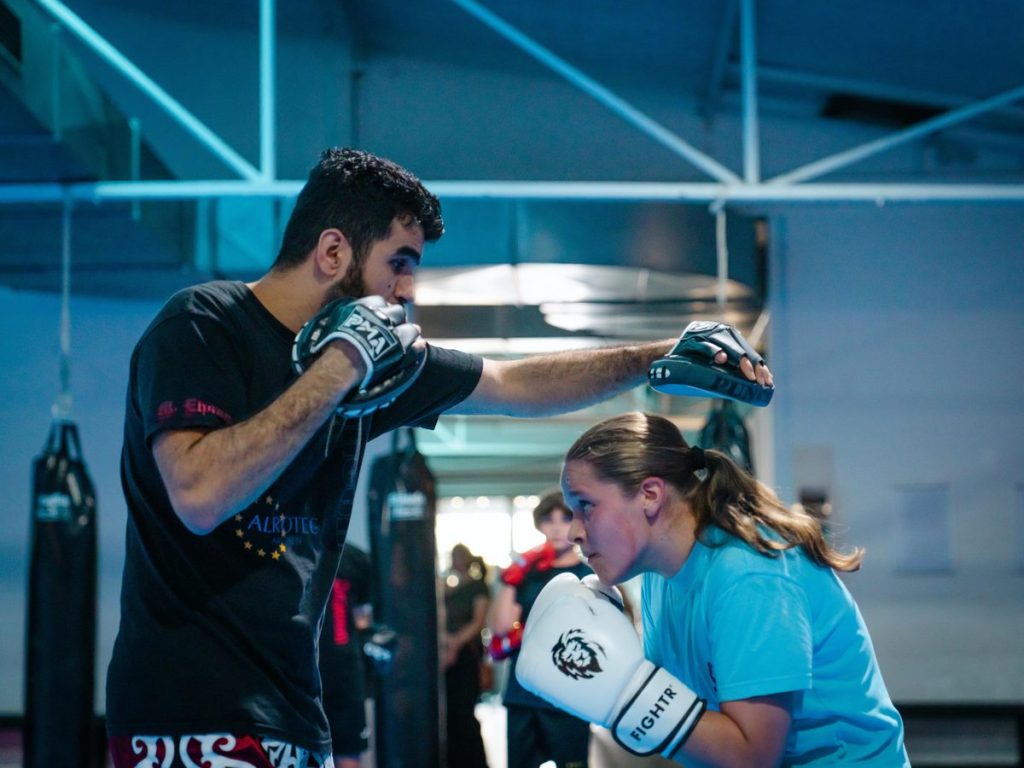
In Kickboxing you train in sparring situations to improve technique under pressure. The beginner group is separate from the fighters’ group, so in your first week you will not be standing among competitors.
In MMA in Aachen training is built up methodically: movements are practised cleanly, then combined and only afterwards applied under pressure in sparring. For advanced students, the sparring sessions are more demanding and follow the actual performance level.
In Ground fighting the corresponding form of practice is called rolling. For many it is the most pleasant way into sparring because nobody gets hit. You can tap out at any time, and that is the built-in safety mechanism of ground fighting.
In Kali there is controlled sparring in stick fighting, following the Sinawali basic patterns and work with the single stick, double sticks, tonfa and long stick.
Which classes manage entirely without sparring?
They exist, and they are not second choice. The women’s class Fitness Kickboxing and Thai boxing runs explicitly without sparring; the Muay Thai elements are trained on the heavy bag. LES MILLS BODYCOMBAT is entirely contact-free.
And in the martial arts classes too: in the sparring part you can do endurance training on the punch bag or in the group instead. So you do not have to sit out if you do not feel like it on a particular evening.
Which five rules apply to your first sparring?
- Say that it is your first. Your partner adjusts. That is normal and costs you nothing.
- Breathe. Beginners hold their breath and are finished after 30 seconds. That is not a fitness problem.
- Pick one thing. Only the lead hand, only keeping distance, only staying calm. Everything at once does not work.
- Hardness creates hardness. Whoever hits hard gets it back hard. Whoever works in control gets it back in control.
- Tapping out or stopping is allowed. Always, by anyone, with no explanation.
What protective equipment do you need?
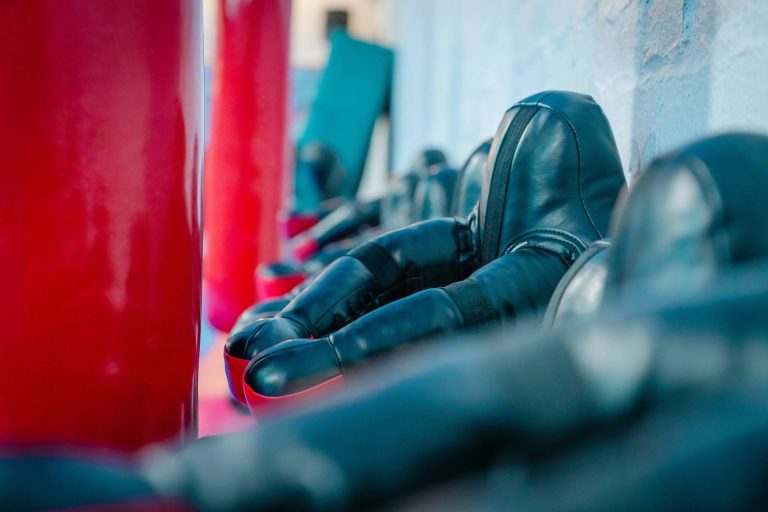
A point that is often missing: protective equipment protects both people. Larger gloves spread the force and so spare not only your hand but also your partner’s head. Anyone who turns up to sparring with competition gloves that are too small does nobody a favour.
Protective gear is a must in sparring. For the trial class you need none of it yet; boxing gloves and protective gear are optional there. Which pieces make sense in which order is covered in the article equipment for beginners.
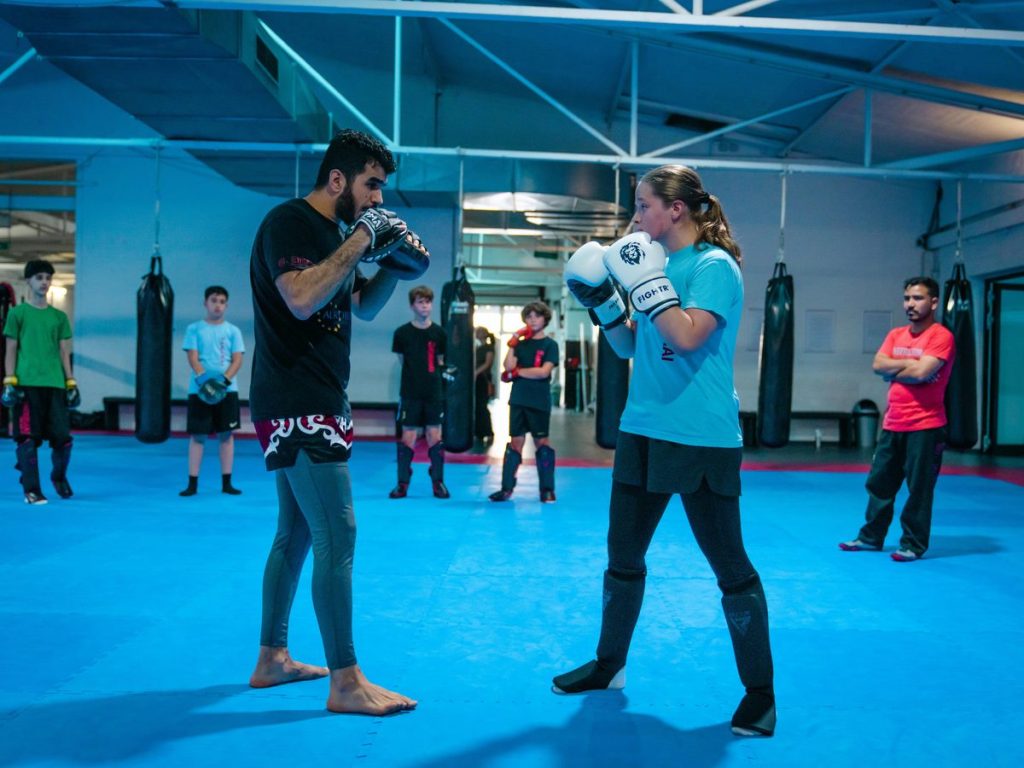
How seriously federations take protection after blows to the head is shown by the protection regulations of the German Boxing Federation with their medical suspensions.
Have a look before you judge it
The most honest way to settle the sparring question is an evening in the hall. Two trial classes are free and non-binding, and depending on the training content you will see a sparring part without having to take part yourself. We train at Jülicher Straße 216 in Aachen.
Secure your slot
Book a free trial
Try two sessions for free, with no obligation and no contract. Pick your class and preferred date right here, without leaving the page.
Class schedule
Your week at the dojo
Pick a day or switch the calendar view.
The dates are filtered immediately.
Available classes
Classes on the selected day
No class, no timetable
Try the gym
Just pick a day and drop by during our opening hours. How long you train is up to you.
- Free training on the machines
- No fixed time
- Free and non-binding
Open: Monday - Friday 09:00-12:00, Monday - Friday 16:00-21:00, Saturday 12:00-17:00
How a training evening goes is on the page about the Free trial class. You will find more background texts in the guide section Martial arts knowledge.
Frequently asked questions about sparring
Do I have to spar in the trial class?
No. Sparring is only introduced once you are technically ready. In the sparring part there is also endurance training on the punch bag as an alternative.
How long until I may spar?
The trainer decides that according to your level, not by a fixed number of weeks. Light partner drills with reaction, on the other hand, are there from the start.
Does sparring hurt?
Controlled sparring should not hurt. Bruises on arms and shins happen, especially at the start. If something gets too hard, you say so, and your partner eases off.
What if my partner is much stronger?
Experienced partners adapt; that is part of the training. In sparring the partners also change regularly, so you do not stay stuck with the same person all evening.
Are there classes with no sparring at all?
Yes. The women’s class runs without sparring, BODYCOMBAT is entirely contact-free, and in the gym you train without a partner anyway.