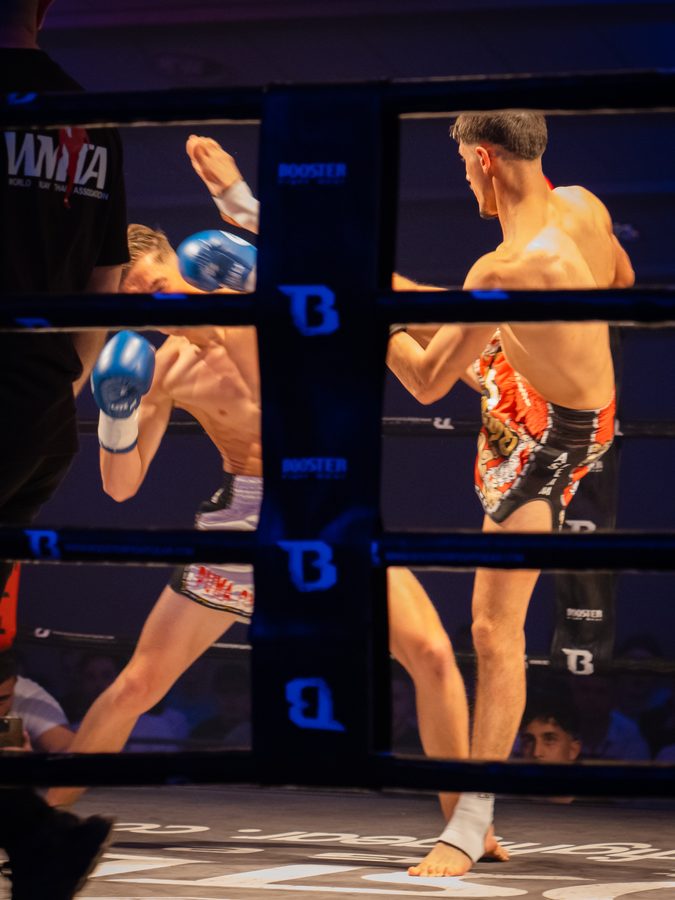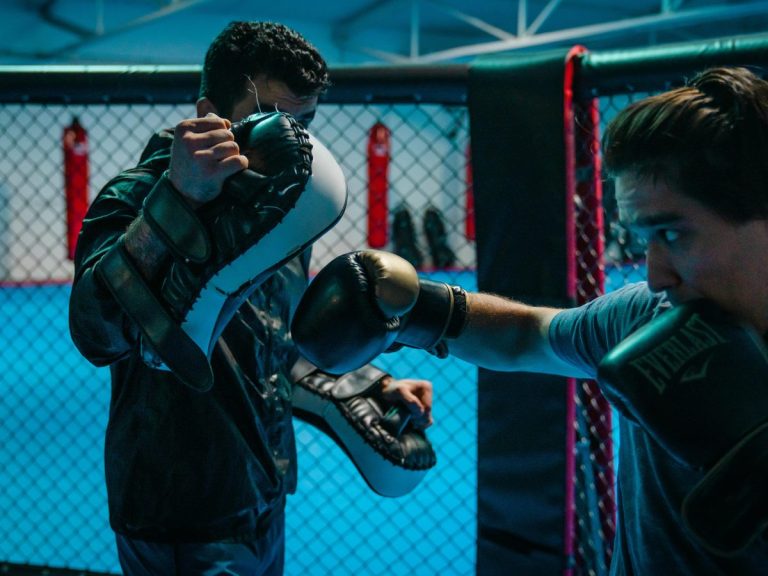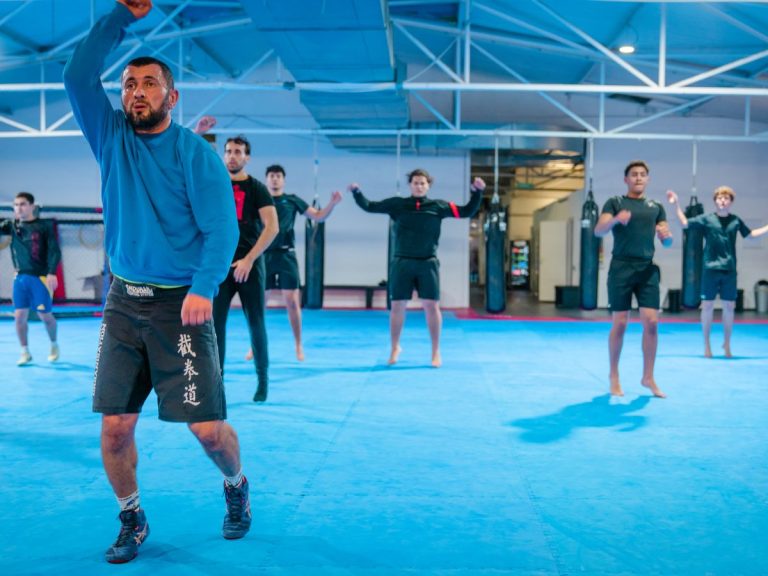
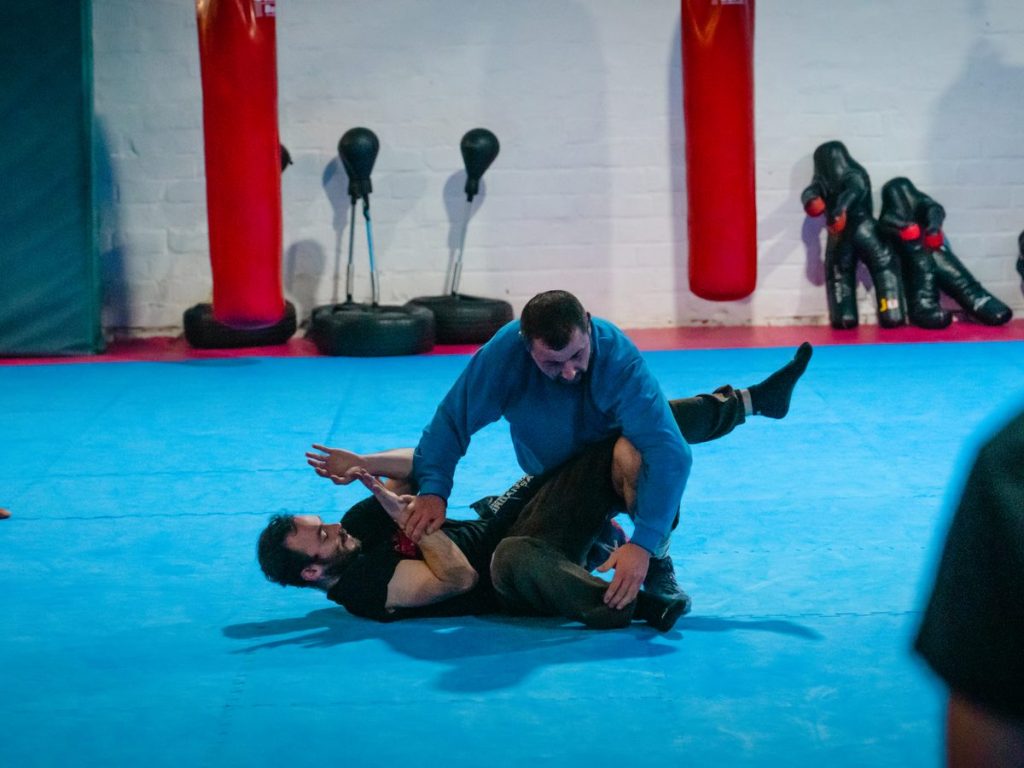
In short: MMA or BJJ comes down to the question of standing. Grappling and Brazilian Jiu-Jitsu play out on the ground, MMA adds standing. So it is not about which is better, but whether you also want to learn to punch and kick.
If you search online for MMA and BJJ, you quickly end up in discussions about which martial art wins. That does little to help you decide which class to join in Aachen. More useful is a sober look at what actually happens in the hall.
What does grappling mean with us?
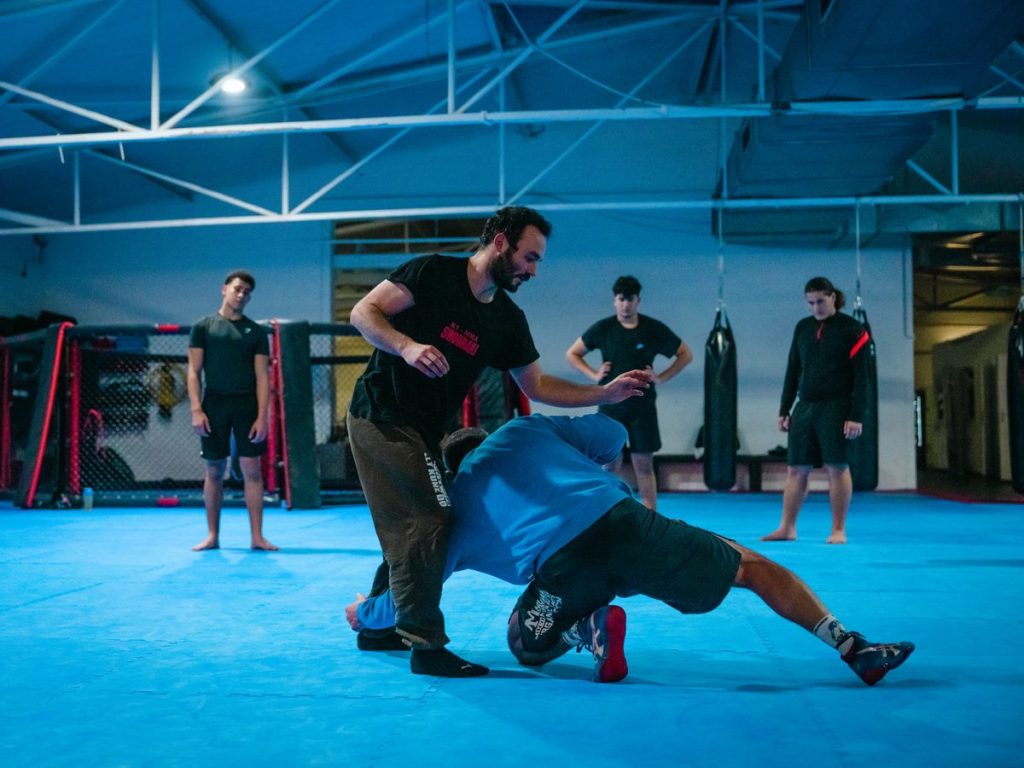
Our Ground fighting combines Brazilian Jiu-Jitsu, freestyle wrestling and kickboxing. The takedowns, that is, the way from standing to the ground, come from freestyle wrestling. Lock and choke techniques such as the armbar, triangle choke and rear naked choke come from Brazilian Jiu-Jitsu. The kickboxing part makes sure the transition from standing to the ground is not practised in a vacuum.
Training is No-Gi, that is, without the classic uniform. That is an important difference to many classic BJJ schools: without grips on the fabric, body control, pressure and position count for more, and the techniques transfer more directly to everyday clothing. Work happens in sparring and rolling sessions.
What does MMA add?
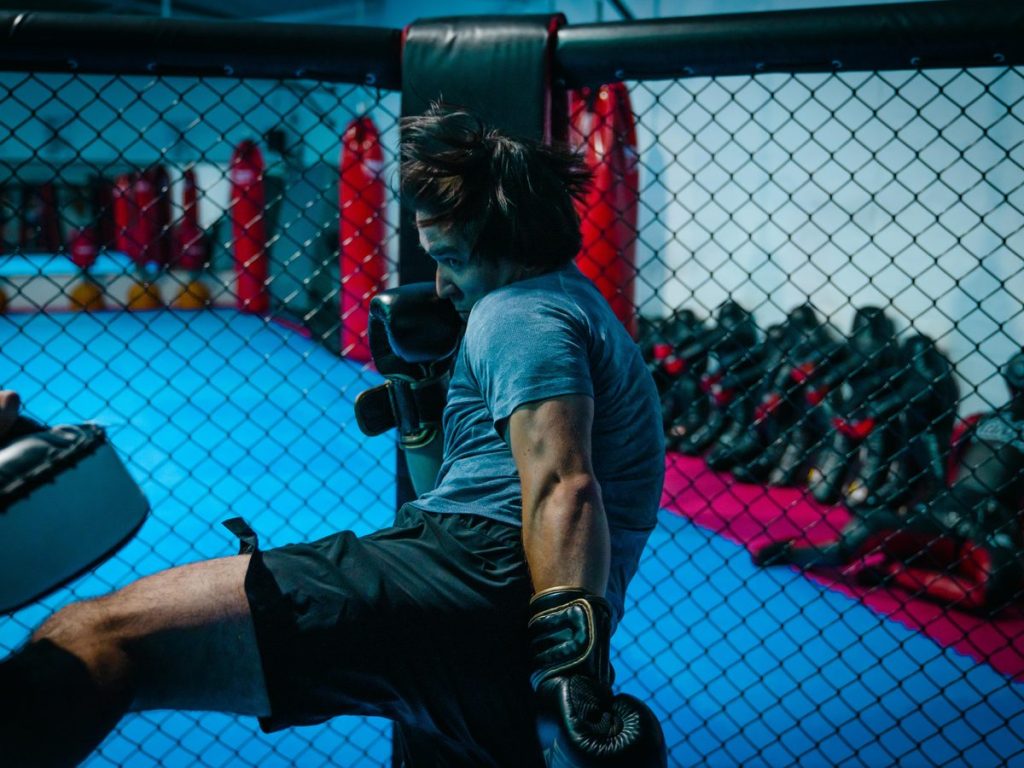
MMA in Aachen contains the same ground part and puts standing fighting in front of it: punches, kicks, knee strikes, clinch, footwork and sense of distance. The real content of MMA is the switch between these areas, and that is exactly what makes the training more demanding and longer to build up.
In practical terms: in MMA you have to think about your guard even when you set up a takedown. In pure ground fighting that worry falls away, and you can concentrate entirely on position and technique.
What does a session feel like?
The structure is the same in both classes: warm-up, technique and partner drills in changing teams, then conditioning and sparring, stretching at the end. What differs is the feel in the middle of those 90 minutes.
In ground fighting you work close to your partner almost the whole time. For many that is the unfamiliar part, and it is usually settled in the first hour: either it quickly feels normal, or it stays strange. In return another hurdle falls away, namely the fear of punches to the head.
In MMA the distance changes constantly. You stand, you clinch, you land on the ground, you get back up. That is more demanding on fitness because your body never settles into a single rhythm. If you like variety, you will find exactly that the appeal of the class.
Which training times suit you?
Ground fighting for adults and teenagers from 16 runs on Thursdays from 19:00 to 20:30 and Saturdays from 12:00 to 13:30. The Saturday slot is the decisive argument for many because it falls outside the working week.
You train MMA on Mondays and Wednesdays from 19:00 to 20:30. If you want to try both, use the two free trial classes for one of each class.
Ground fighting and MMA compared
| What it is about | Ground fighting and grappling | MMA |
|---|---|---|
| Where the fighting happens | on the ground, without strikes | Stand-up, clinch and ground |
| With or without a uniform | No-Gi, that is, without the classic uniform | No-Gi |
| Where the techniques come from | Brazilian Jiu-Jitsu, takedowns from freestyle wrestling, transition from kickboxing | plus punches, kicks and knee strikes standing |
| Training days | Thursdays and Saturdays | Mondays and Wednesdays |
| For teenagers | Grappling for ages 9 to 15, Mondays and Tuesdays | Adult class from age 16 |
Both are trained No-Gi with us.
Which training suits which type?
- You like technique like a game of chess: ground fighting. Position before strength, and one mistake leads straight to a new situation.
- You do not want to be hit: ground fighting. There are no punches to the head here.
- You want the complete picture: MMA. Standing, clinch and ground in one class.
- You already come from standing: ground fighting as a complement. If you already train kickboxing, boxing or MMA, it deepens the ground part in a targeted way.
- Close body contact is not for you: then neither of the two, but Kickboxing or Boxing.
Do you need previous experience or basic fitness?
For ground fighting you need no previous experience. The start works through technique before strength and partner drills at your own pace. That is a real advantage for anyone coming back from a longer break from sport: on the ground, position decides more often than speed.
In MMA the same holds for the start, but you build up three areas at once. Beginners first train the basics before it goes into sparring. For advanced students, sparring sessions are more demanding and follow the actual performance level.
Flexibility helps more on the ground than strength, and it comes with training. If you find on the first evenings that your hips do not keep up, you are not alone. That is the usual starting point and no reason to change classes.
What does it do for self-defence?
Both classes contribute to the topic. In ground fighting you learn to hold your own in real dangerous situations when a confrontation ends up on the ground. MMA additionally covers the phase before. If the topic as a whole interests you, you will find more in the guide Learning self-defence in Aachen.
That Brazilian Jiu-Jitsu is also trained in federation sport with and without a uniform is described by the German Ju-Jutsu Association.
MMA or BJJ: try twice, then decide
Whether close body contact suits you is not something you find out by reading. One ground fighting session and one MMA session answer the question in two evenings. Both are free and non-binding, and we train at Jülicher Straße 216 in Aachen.
Secure your slot
Book a free trial
Try two sessions for free, with no obligation and no contract. Pick your class and preferred date right here, without leaving the page.
Class schedule
Your week at the dojo
Pick a day or switch the calendar view.
The dates are filtered immediately.
Available classes
Classes on the selected day
No class, no timetable
Try the gym
Just pick a day and drop by during our opening hours. How long you train is up to you.
- Free training on the machines
- No fixed time
- Free and non-binding
Open: Monday - Friday 09:00-12:00, Monday - Friday 16:00-21:00, Saturday 12:00-17:00
Questions about equipment and group allocation are quickest settled directly at the Free trial class. More comparisons are in the section Comparing martial arts.
Frequently asked questions about MMA and grappling
Is grappling the same as BJJ?
Not quite. Grappling is the umbrella term for ground fighting without strikes. Our class combines techniques from Brazilian Jiu-Jitsu with takedowns from freestyle wrestling and the transition from kickboxing.
Do you train with or without a gi?
No-Gi, that is, without the classic uniform. You do not need to buy a gi; close-fitting sportswear is enough.
Can I train both?
Time-wise yes, the sessions are on different days: MMA on Mondays and Wednesdays, ground fighting on Thursdays and Saturdays.
Will I get bruises in ground fighting?
Sometimes at the start, especially on the forearms. There is no striking in ground fighting. In the starting phase you help set the pace.
Is there ground fighting for teenagers too?
Yes. The Grappling Youth group for 9 to 15-year-olds trains on Mondays and Tuesdays from 17:30 to 18:30 as part of the youth training, also No-Gi.