In short: Kali, Escrima and Arnis are names for the same Filipino martial art, and stick fighting is its usual way in. In Kali Escrima stick fighting you learn to work with a stick from the very first session, training coordination, reflexes and timing as you do. The movements can later be applied without a weapon too. You need no previous experience, and the minimum age for stick fighting is 16.
What is Kali, and what are Escrima and Arnis?
Depending on region and school, Kali, Escrima and Arnis name the same martial art from the Philippines. It teaches work with sticks, knives and unarmed techniques. In self-defence, Kali is considered practical because it relies on realistic patterns of attack and defence.
In the everyday life of the hall the name hardly matters. The division matters more: there is stick fighting and knife training, both belong to Kali but differ in distance and movement.
How does stick fighting run in training?
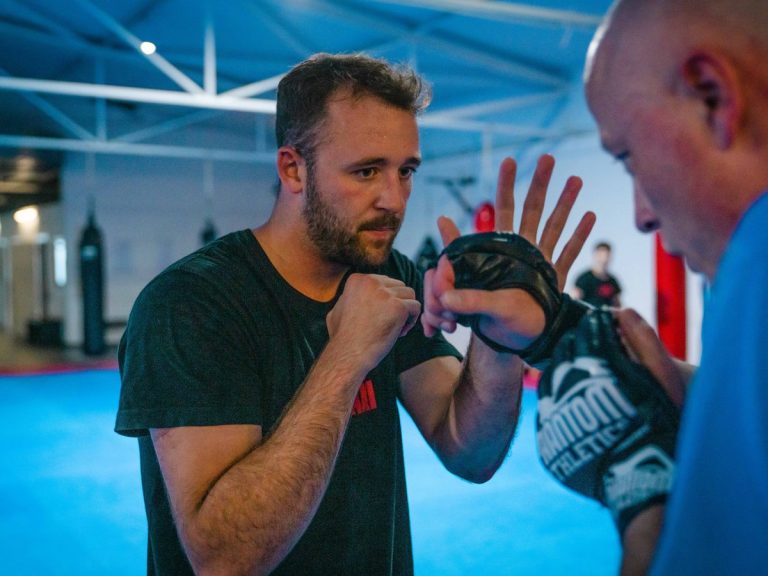
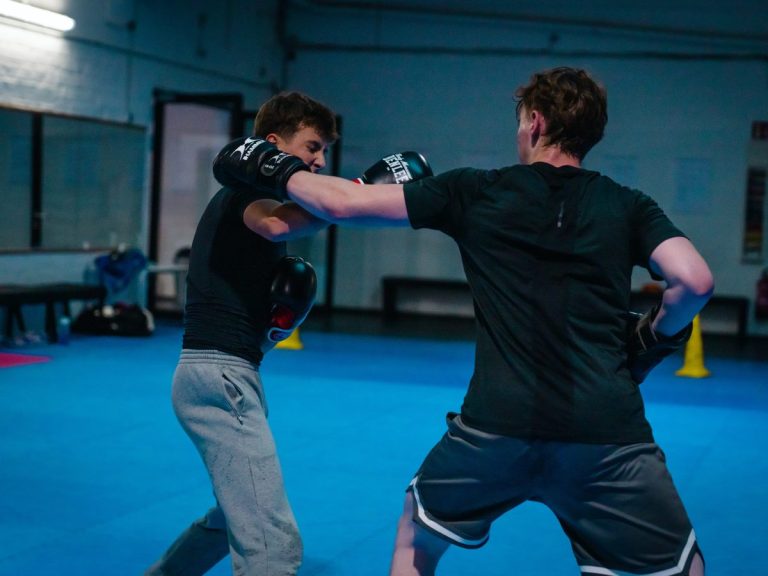
A session begins with a thorough warm-up. Technique training and partner drills follow, then sparring and conditioning, and finally stretching and cool-down. In Kali Escrima stick fighting the emphasis is on clean strike paths and hand-eye coordination.
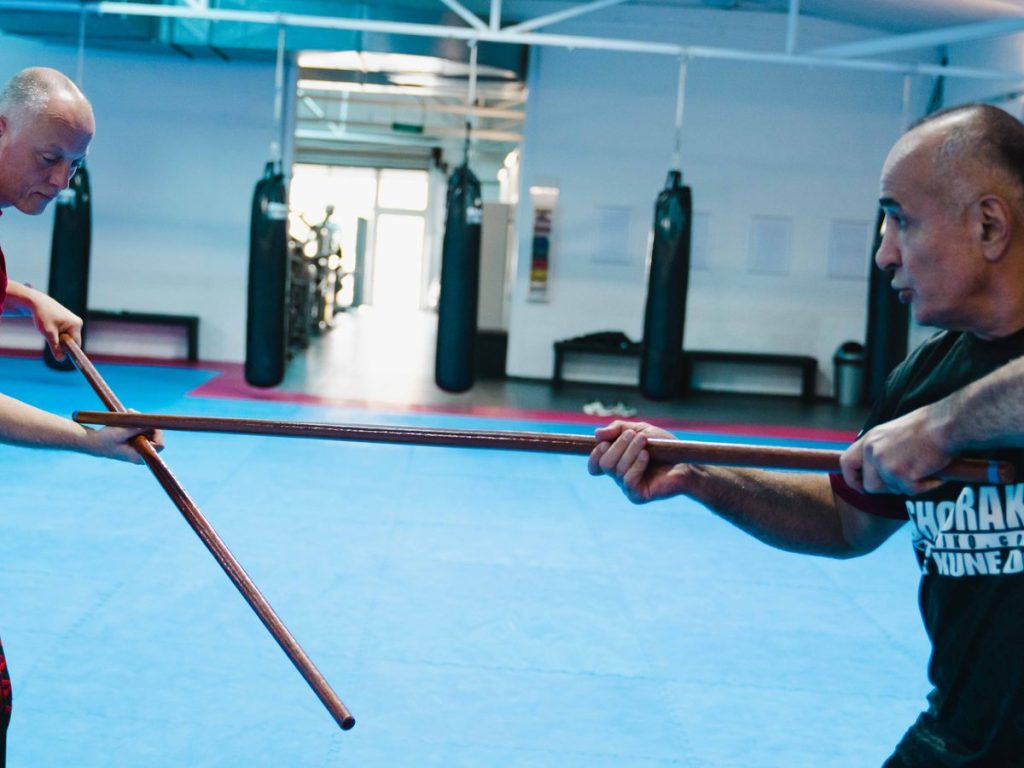
At the start come the basic movements, called Sinawali. You strike set patterns, first slowly, then faster. Building on that come partner drills such as Sumrada, in which attack and defence are trained in a flowing cycle. Depending on your level, you work with a single stick, double sticks, tonfa and long stick, up to controlled sparring.
The pace follows you. The drills are adapted so that beginners and advanced students find their place in the same class.
Stick or knife: what is the difference?
Both areas belong to Kali but work with different emphases:
- In stick fighting you use greater reach, strong strike paths and a lot of rhythm.
- In knife training, short distance, precision and control of the weapon hand count. Practice uses training equipment.
Anyone starting with Kali Escrima stick fighting usually starts with the stick. Knife training is open with us only from age 18.
Who is Kali suited to?
Kali Escrima stick fighting suits you if you want to train coordination, reflexes and timing. Kali appeals to adults who want to build self-defence skills, but also to people training in other disciplines, because the movement patterns improve timing and sense of distance.
Kali Escrima stick fighting is also a good counterbalance to everyday life. You learn to read movements early, stay calm under pressure and decide consciously. Discipline and focus come with it. Hand-eye coordination and body control have effects beyond training.
If you start late, the article Martial arts after 40 explains why coordination comes before athleticism. And if you want to place Kali as part of self-defence, read which self-defence course in Aachen covers which distance.
Trying Kali Escrima stick fighting at Shouraki
Our class is called Kali and Escrima in Aachen. Stick fighting runs on Thursdays and Saturdays, from age 16. Knife training takes place on Mondays and is open from age 18. Current times are in the timetable.
You need no equipment of your own. Comfortable sports clothing, flat trainers and enough water are enough. The school initially provides training sticks and training knives. After that you gradually get the equipment yourself. You can train twice, free and without obligation: here you book your free trial class.
Frequently asked questions about Kali, Escrima and stick fighting
Are Kali, Escrima and Arnis the same?
In practice yes. They are different names for the Filipino martial art with stick, knife and unarmed techniques. Differences in teaching depend more on the teacher than on the name.
Do I need previous experience or my own sticks?
No. You can start without previous experience and need no equipment of your own for the first session. The school initially provides training sticks.
From what age can I learn stick fighting?
Stick fighting is open at Shouraki from age 16. Knife training is only possible from age 18.
Is Kali dangerous?
In controlled training, Kali is not fundamentally more dangerous than other sports. Practice follows set routines with training weapons, under guidance and at a pace that suits your level. Control, suitable protective equipment and mutual respect are compulsory.
When does Kali training take place in Aachen?
Knife training runs on Mondays, stick fighting on Thursdays and Saturdays. The exact times are in the timetable, because the weekly schedule changes occasionally.