In short: assertiveness for children means practising a clear no, staying calm and coping with pressure, not fighting. In martial arts, children train this in a group: with movement, rules and partner drills. They learn controlled blocking and evading, and they experience that respect is part of it. The training does not replace a conversation at home, but it supports it. Here you find out what is realistic at which age.
What does assertiveness for children mean?
Assertiveness is more than technique. It is about attitude: standing tall, speaking loudly and clearly, setting boundaries and getting help. Children who practise this come across as more confident, even if they never have to use it physically.
Self-defence is the physical part of it and comes in later. At our school, the word assertiveness appears among the goals of children’s training alongside coordination, balance, concentration and teamwork. At the same time we value respect and non-violent behaviour.
What do children learn at which age?
Assertiveness for children grows with age. The groups are therefore separate, and there is a reason: a three-year-old needs something different from a twelve-year-old.
- Panda group, ages 3 to 5: movement, rules and belonging to the group come first, not fighting technique.
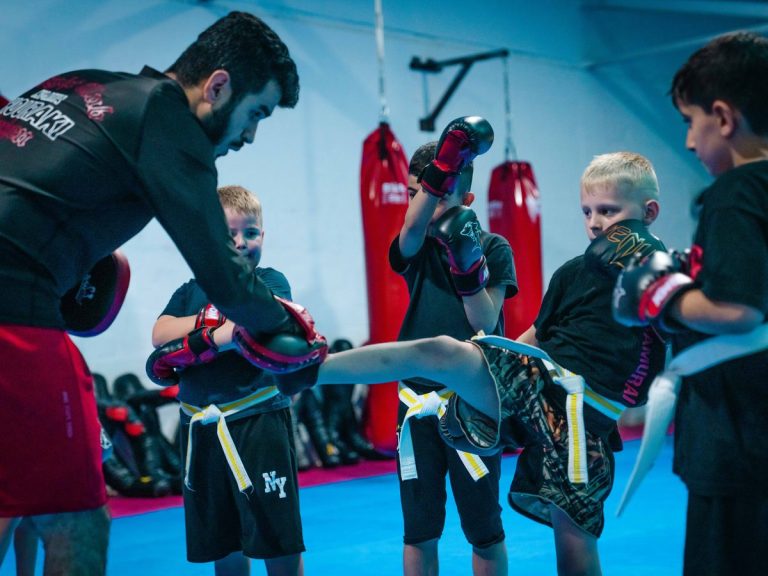
- Ninja group, ages 6 to 8: controlled blocking, evading and simple punching and kicking techniques. Elements from boxing, kickboxing, freestyle wrestling and Brazilian Jiu-Jitsu are added.
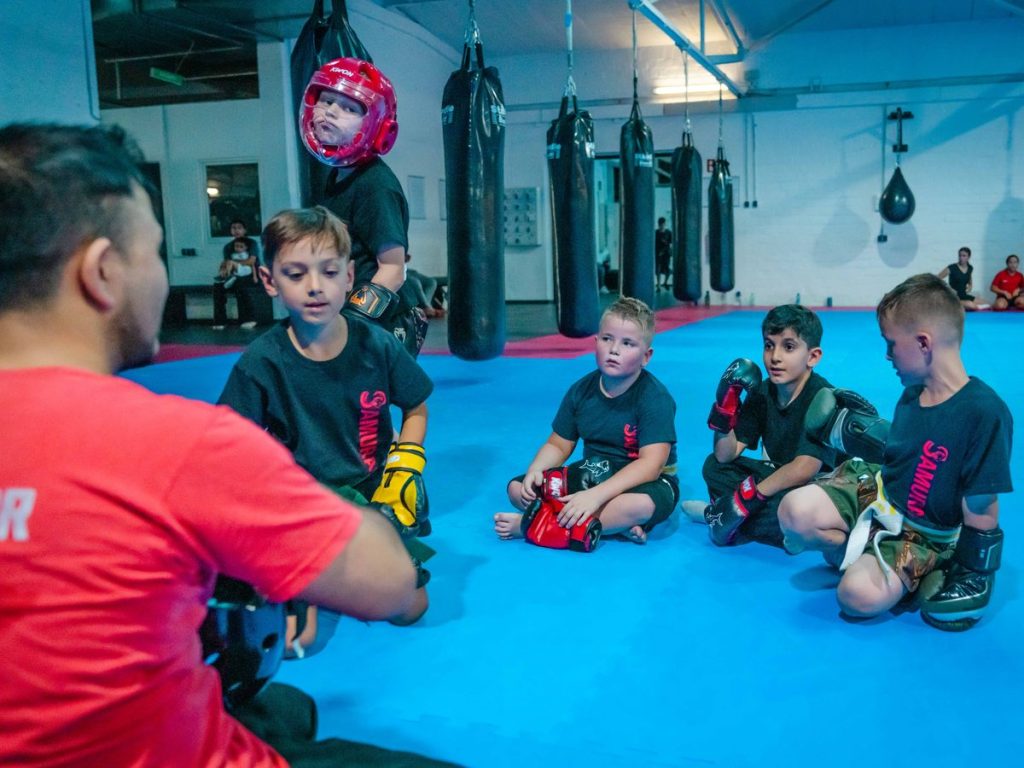
- Samurai group, ages 9 to 15: self-defence, movement sequences, timing and discipline, with controlled sparring that is only stepped up once technique and readiness are right.
From age 16, teenagers move into the adult classes. Why the groups are divided this way is explained in the article Martial arts for kids: from what age.
How does a session run?
Every session begins with a warm-up. Technique and partner drills follow, playful conditioning, and stretching with a cool-down. The partner drills are the core of assertiveness: children experience what it is like to stay calm when someone stands in front of them, and to stay fair while doing so.
Assertiveness for children only works with a counterpart, and the group matters because assertiveness cannot be practised without one. Anyone who can measure themselves in a group without it escalating takes that feeling into everyday life.
What should parents know?
You may watch the training. In the hall there is a waiting area with a bench, plus a separate area with coffee, snacks and drinks, and free parking. During the session you can try the gym once, free of charge.
Children bring comfortable sports clothing, clean indoor shoes and something to drink. For everyone under 18, suitable protective equipment is compulsory, namely head guard, shin guards and groin guard. The school provides the large training equipment. Please arrive about 15 minutes before the start. You will find details about the groups on the page Kids’ martial arts in Aachen, and for older children on the page Youth training for ages 9 to 15.
Two sessions to try out
You and your child can best see for yourselves whether the training suits. Your child can train twice, free and without obligation, in the right age group and with no contract. The second session is usually more telling, because the first lesson is still marked by excitement. We train at Jülicher Straße 216 in Aachen.
Frequently asked questions from parents
From what age does this make sense?
Children’s training starts at age 3. At first it is about movement and rules. Actual assertiveness with partner work suits children better from about age 9.
Does martial arts make children more aggressive?
In training, children learn to control their strength and keep to rules. Respect and non-violent behaviour are among our principles. If your child causes problems, talk to the trainer.
May I watch the training?
Yes. There is a waiting area in the hall, and parents are welcome.
Does my child need their own equipment?
For the first session, sports clothing is enough. The school provides starter equipment and the large equipment. For under-18s, protective equipment is compulsory.
Does the training replace a conversation about boundaries?
No. The training supports it. Talk openly at home about when your child may say no and who they can turn to for help.