In short: in everyday use, Jiu-Jitsu and BJJ usually mean the same thing, namely Brazilian Jiu-Jitsu, a martial art for the ground with holds, joint locks and chokes. Ju-Jutsu is a different, broader system with punches, kicks, throws and joint locks. Judo relies on throws, wrestling on takedowns and control. Grappling is the umbrella term for all forms of fighting without strikes. Here we sort the terms out for you.
What is BJJ?
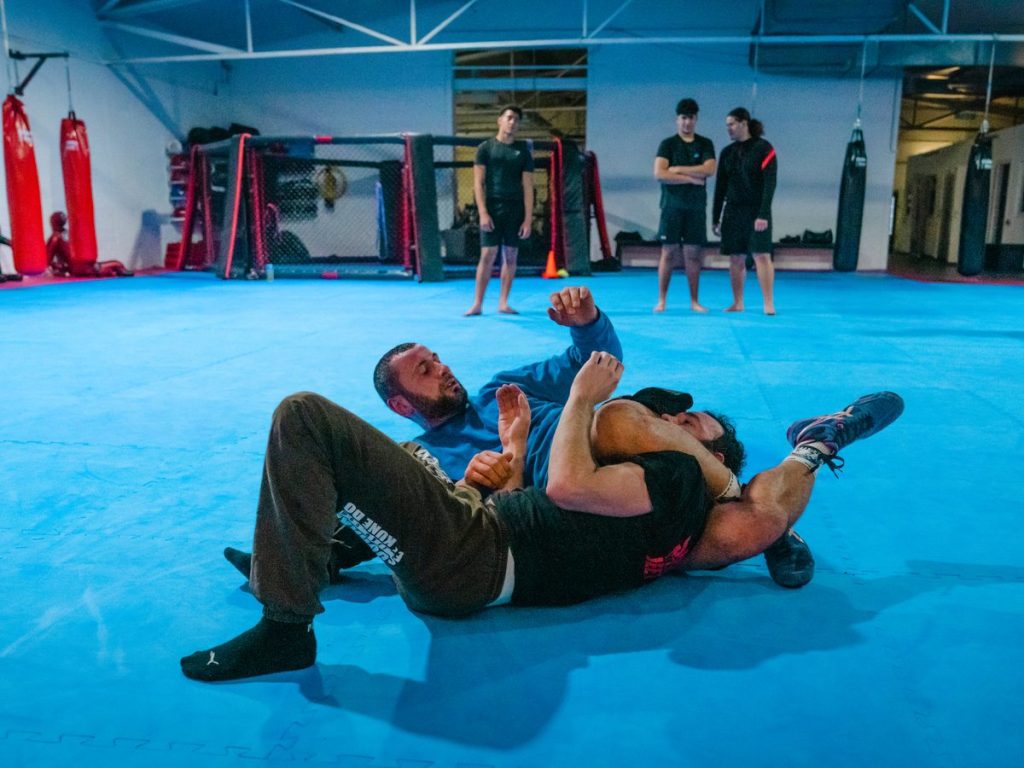
BJJ stands for Brazilian Jiu-Jitsu. The sport arose in Brazil from judo and Japanese jiu-jitsu and concentrates on ground fighting. The aim: control the opponent on the ground and force a submission with joint locks or chokes. Strength plays a part, but technique and leverage weigh more.
Training uses set partner drills and free rolling, which is what ground sparring is called. Depending on the school, you wear the gi, the classic jacket, or train without it, known as no-gi.
Jiu-Jitsu and BJJ compared with Ju-Jutsu
The spellings are confusing: “Jiu-Jitsu” is the usual spelling in Brazil and the USA, “Ju-Jutsu” the one used in Germany. Behind them, however, are different concepts. In Germany, Ju-Jutsu is mostly taught as a self-defence system and combines punches, kicks, throws, joint locks and holds. BJJ, by contrast, relies almost entirely on the ground.
If by “Jiu-Jitsu” you mean ground fighting, you are looking for BJJ. If you want a broad self-defence system covering standing and ground, you often mean Ju-Jutsu. That is a rule of thumb; schools do not always use the names consistently.
Where is the difference from judo and wrestling?
- Judo: throws from a grip on the jacket, plus holds, joint locks and chokes. The fight on the ground usually lasts shorter.
- Wrestling: takedowns and control, without chokes and joint locks. Opponents are held and pinned.
- BJJ: ground fighting with joint locks, chokes and changes of position. Whoever is underneath can still win.
- Grappling: umbrella term for fighting without strikes. BJJ, wrestling and judo are varieties of it.
What do we offer in Aachen?
You learn Jiu-Jitsu and BJJ with us in the ground fighting and grappling class. It is neither a Ju-Jutsu nor a judo class. You learn holds and chokes from Brazilian Jiu-Jitsu, plus takedowns from freestyle wrestling and transitions from kickboxing. Training is no-gi, that is, without the classic uniform.
The class is open to adults and teenagers from age 16 and runs on Thursdays from 19:00 to 20:30 and Saturdays from 12:00 to 13:30. Teenagers aged 9 to 15 train in their own group. All dates are in the timetable on the page Ground fighting and BJJ in Aachen. Whether pure ground fighting is enough for you or you want striking as well is covered in the article MMA or grappling.
Do you need previous experience?
No. You need no previous experience, and competing is voluntary. A session starts with at least 20 to 25 minutes of warm-up, followed by technique and partner drills, sparring or rolling with conditioning, and stretching. Sparring is only stepped up once you are ready technically and mentally. Bring close-fitting sports clothing without zips and something to drink. The school provides mats and large equipment.
If you would like to see Jiu-Jitsu and BJJ first, you can train twice, free and without obligation. If you want to combine ground fighting with striking, you will find the right class on the page MMA in Aachen.
Frequently asked questions about ground fighting
Is BJJ the same as Jiu-Jitsu?
In everyday use, usually yes. What is meant is Brazilian Jiu-Jitsu. Ju-Jutsu in Germany, by contrast, is a broader system that also includes punches and kicks.
What is the difference between grappling and BJJ?
Grappling is the umbrella term for fighting without strikes. BJJ is one variety of it, focused on joint locks and chokes on the ground.
Do you train with or without a gi?
Our ground fighting class runs without a gi, that is, no-gi. Training without a uniform builds a base that also helps when training with a gi.
Do I have to be fit to start?
No. Your fitness grows with training. At the beginning you set your own pace.
From what age can I start?
The adult class is open from age 16. Teenagers aged 9 to 15 train in their own grappling group.