In short: martial arts for shy children can be an opportunity if the start is gentle and the child is not pushed. In training, children practise in a group how to look after a partner, set boundaries and master tasks step by step. It is not a cure for shyness, and some children need more time. Whether it fits shows best in a trial class where you, as a parent, may stay.
What does shy mean, and what can training do?
Shy does not mean “weak”. Many children watch first and join in once they feel safe. That is a trait, not a fault, and it changes with age.
Martial arts for shy children can help when the training is well built. There are fixed routines, clear rules and a group that gets to know each other. Children experience in an age-appropriate, playful setting that they can achieve something. This cannot be promised: how a child takes to training depends on their nature. With lasting anxiety or strong insecurity, the paediatrician is the right first port of call.
What do children learn in training?
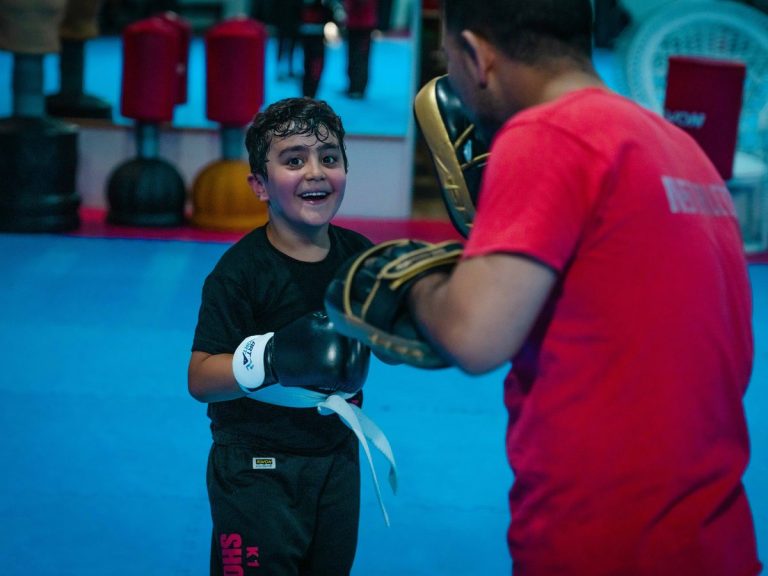
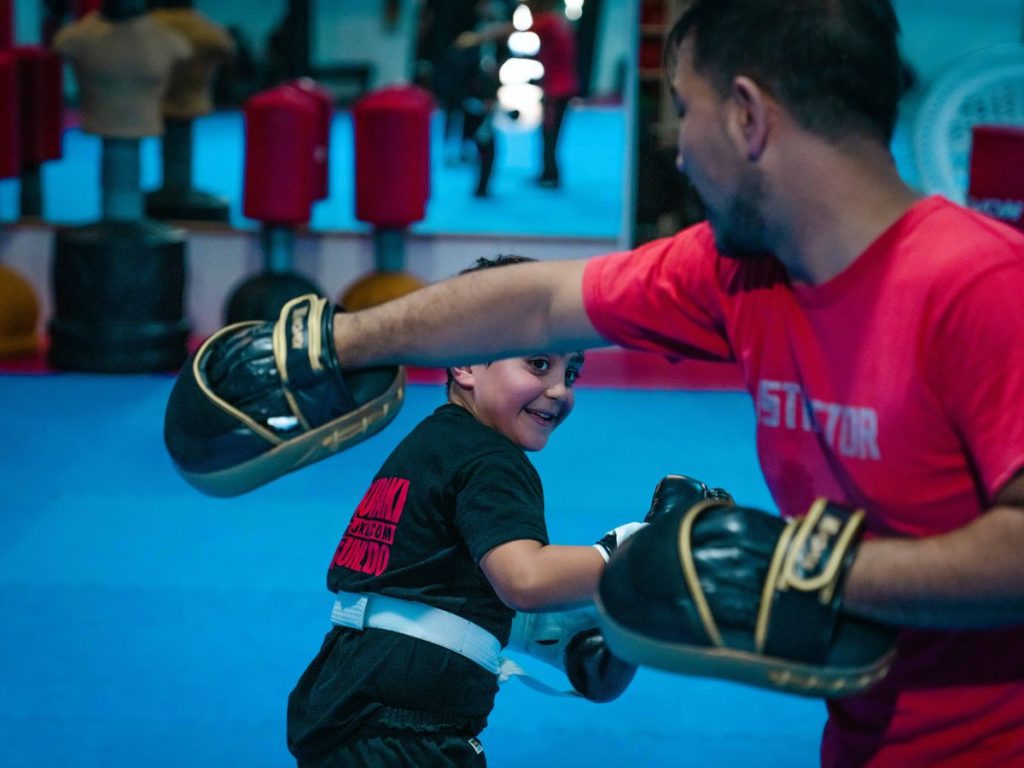
At Shouraki children learn, playfully, controlled defending, targeted evasion and simple punching and kicking techniques. The focus is on movement, awareness and respectful dealings with each other. Three things matter especially for martial arts for shy children:
- Assertiveness: children learn to stand up for themselves and set clear boundaries, confidently and respectfully.
- Partner drills: they improve timing, sense of space and reaction, and practise supporting each other and showing consideration.
- Concentration: focused sequences help steer attention better.
Does martial arts make children aggressive? The opposite is the aim: respect, consideration and non-violent behaviour are explicitly the focus.
How does a shy child get started?
A few steps are enough to start martial arts for shy children:
- Talk to your child beforehand about what will happen, and let them have a say.
- Arrive about 15 minutes early so there is time to change and settle in.
- Stay in the background but in sight. Parents can watch children’s training; there is a waiting area with drinks and snacks.
- Apply no pressure. Speak to the trainer beforehand if your child needs time to settle.
- Give the training time. Two trial sessions are free, so you do not have to decide at once.
Which group fits?
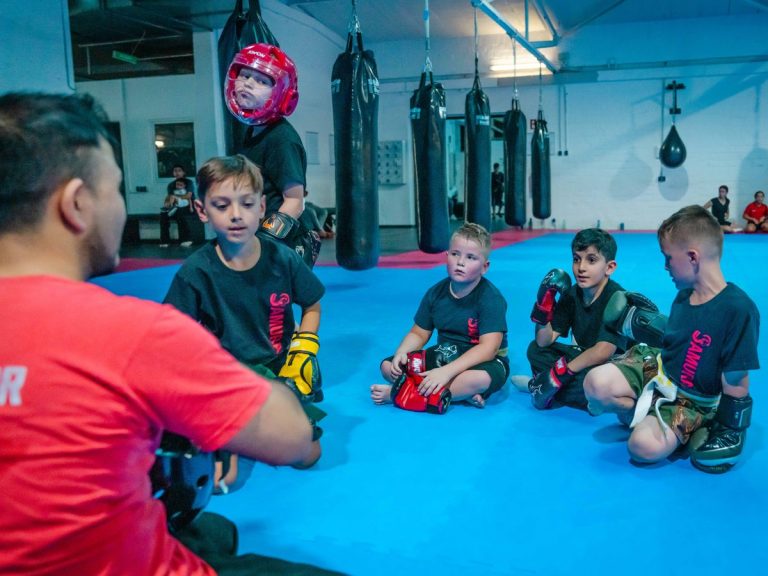
The groups are staggered by age: Panda for ages 3 to 5, Ninja for 6 to 8 and Samurai for 9 to 15. More on choosing is on the page Children’s martial arts in Aachen. Older children and teenagers train in Youth training from age 9. How to judge the right age is explained in the article Martial arts for kids: from what age.
Trial class for your child
For martial arts for shy children the trial class is especially valuable: your child gets to know the room, trainer and group without commitment, and you see how the session is built. Your child can train twice free of charge, without obligation and with no contract. You register for a date beforehand. You need comfortable sports clothing, clean indoor trainers and something to drink. Here you can choose your date for the trial class. We train at Jülicher Straße 216 in Aachen.
Frequently asked questions about martial arts for shy children
Does martial arts help with shyness?
It can foster confidence and body awareness, but that is no promise. A gentle start, a good group and time are what count.
From what age can my child start?
From age 3 in the Panda group, then Ninja from 6 and Samurai from 9. From 16 the adult classes are open.
May I be present during training?
Yes. Parents can watch children’s training; there is a waiting area with drinks and snacks, and free parking.
What does my child need for the first session?
Comfortable sports clothing, clean indoor trainers and something to drink. For children under 18, suitable protective equipment is compulsory; at the start the school can provide equipment.
What if my child does not join in at the trial class?
That happens and is no cause for worry. Give the child time, talk to the trainer and use the second trial session.