In short: a self-defence weekend course gives you an overview and lowers inhibitions, while ongoing training makes you more able to act when it counts. Both have their place, but they solve different tasks. If you have little time or just want to get a taste, a compact course works well. If you want to recall techniques under pressure, you need repetition over months. In Aachen we currently offer no weekend format; self-defence is a fixed part of the regular training.
What does a weekend course really deliver?
A self-defence weekend course has three strengths. It shows you in a short time which situations exist and how to spot them early. It removes the hurdle of practising with physical contact and pressure at all. And it fits easily into a full diary.
Its limit is repetition. A movement you have been shown once is not automatically recalled by your body under stress. That is not a criticism of compact courses, only a question of expectation: a weekend does not replace months.
What does ongoing training bring?
In ongoing training you practise the same sequences again and again, with changing partners, at rising tempo and under pressure. This gets you used to closeness and stress, and that familiarity is the core of effective self-defence. It cannot be shortened.
Unlike a self-defence weekend course, you repeat sequences over weeks. A rule of thumb is in the article Self-defence course in Aachen: which one suits you: after four to six weeks you react differently, after half a year the basics of one distance are in place. One to two sessions a week are a sensible frame.
The two ways do not exclude each other. A self-defence weekend course can be the first step to lower inhibitions, and ongoing training builds on it. If you want to train regularly anyway, skip the detour and start straight with a trial class. If you are unsure, begin with the format that commits you less.
When is a self-defence weekend course enough?
A compact format can be enough if you
- first just want to find out whether training with body contact suits you,
- want to refresh one specific topic, such as awareness and distance in everyday life,
- cannot free up a fixed time in the week right now.
Ongoing training is the better choice if you
- want to be able to apply techniques under pressure,
- want to build fitness and reaction at the same time,
- are ready to commit to a fixed session for months.
How do you recognise a good compact offer?
For a self-defence weekend course, ask beforehand about group size, the trainer’s experience and how much time goes to repetition and pressure. A reputable offer does not promise that you will be “able to defend yourself” afterwards. It says what is realistic in the time and names the way on. Also check whether it leads into a follow-up course.
How self-defence is learnt at Shouraki
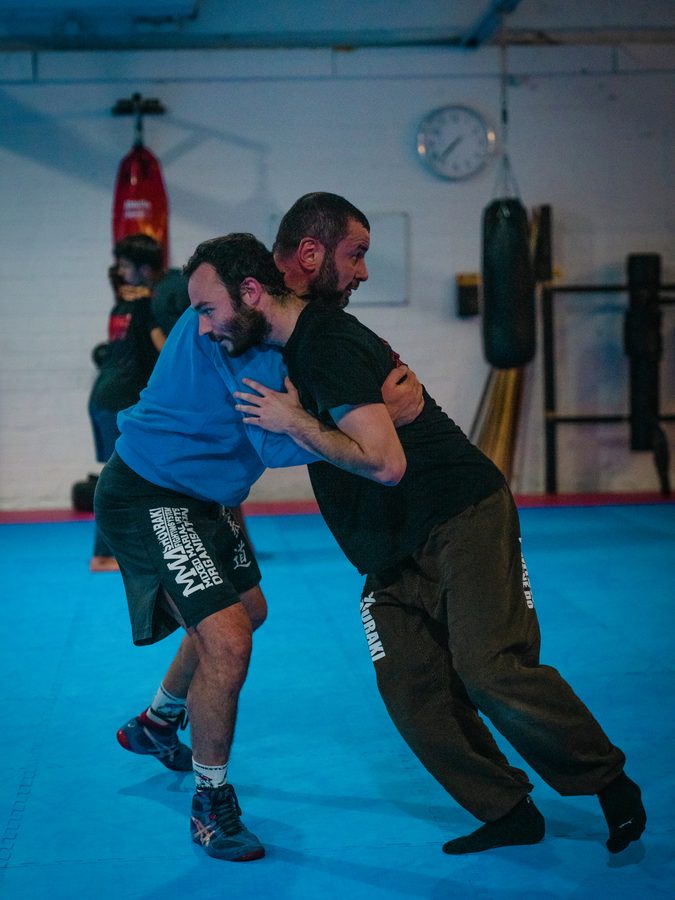
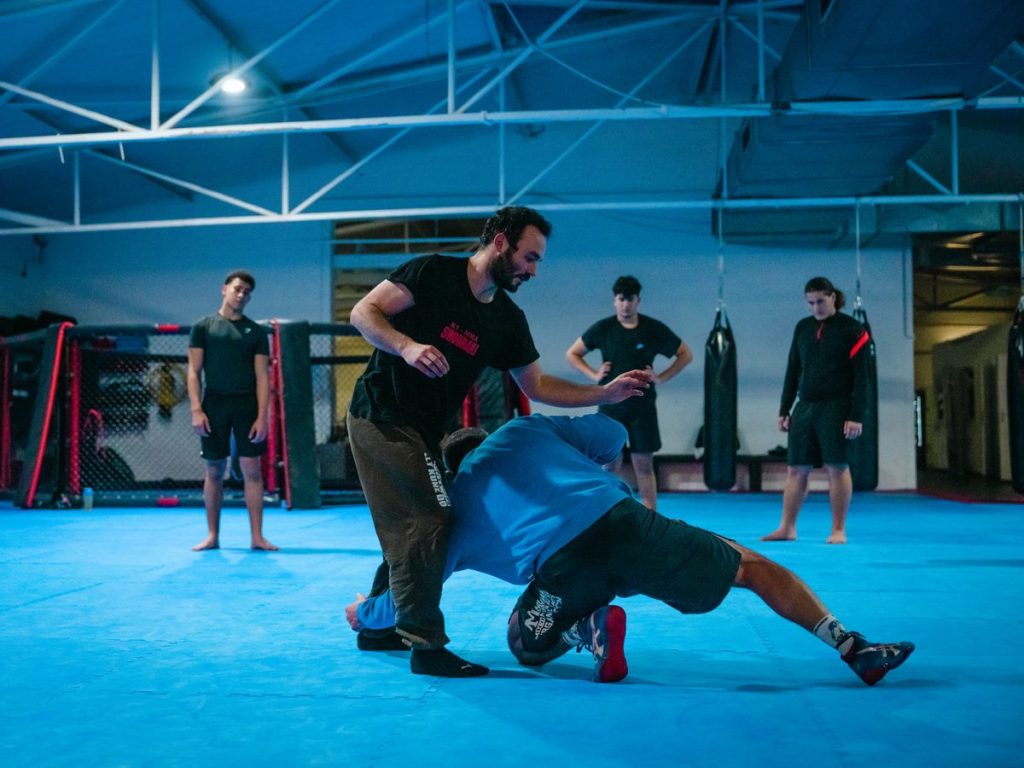
With us there is no pure self-defence course; self-defence is part of the regular classes. MMA in Aachen combines stand-up, clinch and ground. Wing Chun works at short distance, and ground fighting and Kali complement it. Which class covers which part is sorted in the article above.
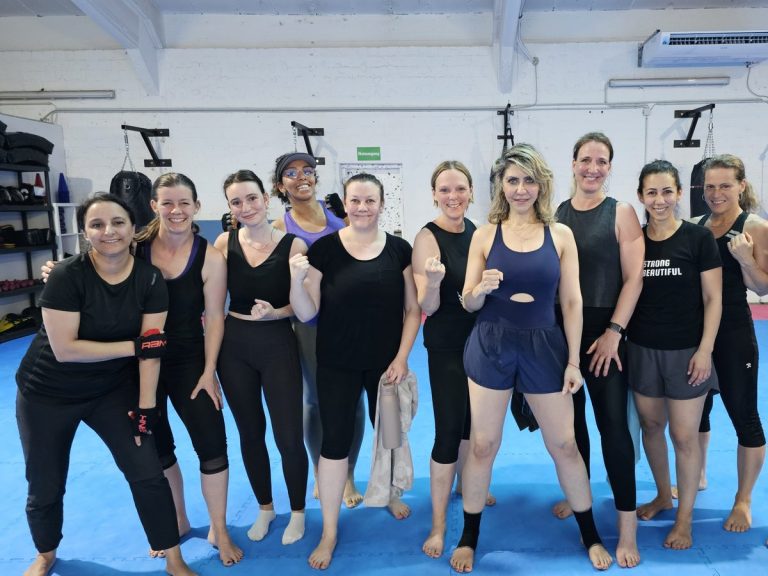
If you want to learn self-defence without sparring, Martial arts for women in Aachen leads to the women’s class without partner fighting. You can try every class twice free of charge, which gives you the taster of a compact course without committing. Here you book your free trial class.
Frequently asked questions about self-defence in a weekend course
Is a weekend enough to defend myself?
Not reliably. A weekend gives an overview and awareness; techniques under stress need repetition over months.
Is there a self-defence weekend course at Shouraki?
Not at the moment. Self-defence is a fixed part of regular training in MMA, Wing Chun, ground fighting and Kali.
How often should I train?
One to two sessions a week are a sensible frame to begin with. Regularity brings more than one intense week.
Can I test ongoing training first?
Yes. You can train in every class twice, free of charge and without obligation, with no contract.
Do I need previous experience?
No. You need none to start; fitness and body control develop with training.